The honest comparison · Arizona edition

LVP vs Engineered Hardwood

Marketing compares these floors by looks and price. Installers compare them by how they fail. One is waterproof plastic that looks like wood; the other is real wood built in layers so it can live on an Arizona slab. Here is the failure-mode comparison, the pros and cons of each, and a straight verdict for your kind of home.

5.0 · 47 Google reviews Licensed & insured We install both — no dog in this fight
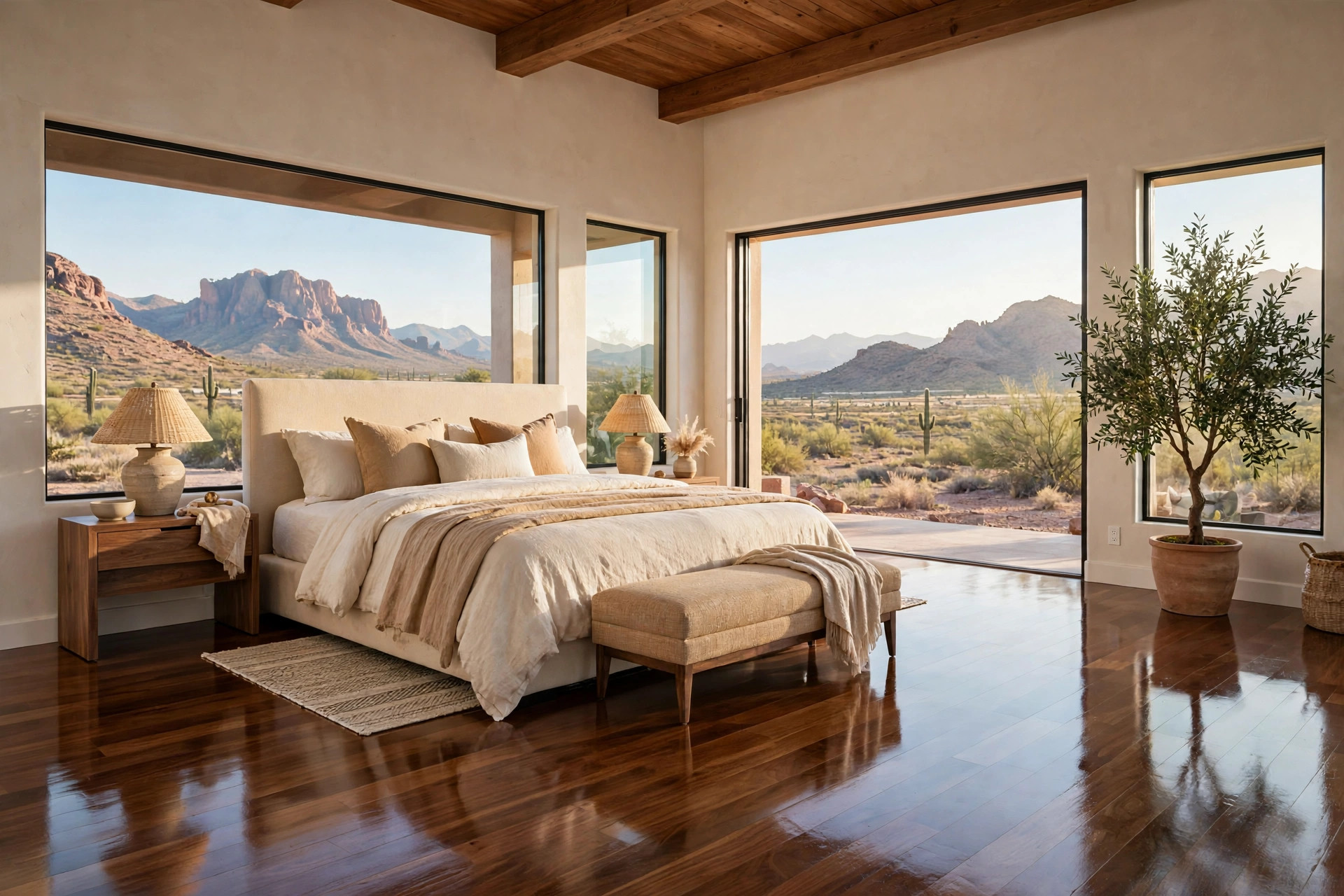
Finished engineered hardwood floor in an Arizona master suite, installed by Honest & Affordable

The short answer

Pick by what your rooms do to a floor. LVP wins wherever water, dogs or budget rule — it is waterproof through its whole body and costs less installed. Engineered hardwood wins when you want real wood that can actually live here: its layered core is the slab-safer construction, it glues straight to a prepared slab, and a thick wear layer can be refinished — a second life LVP never gets. Everything below is the evidence, drawn from our published Arizona flooring guides.

LVP (luxury vinyl plank)

$4.50–$9 / sq ft installed · published Phoenix range

Pros

  • Waterproof through the whole plank — spills, urine, mopping
  • Costs less installed: $4.50–$9/sq ft vs engineered at $7–$13
  • 20 mil wear layer option: the dog-proof, commercial-grade spec
  • Rigid SPC core resists dents and stays stable on slab

Cons

  • No refinish option: worn-through print layer means plank replacement
  • Vinyl expands with heat — cheap product can soften and open joints in extreme surface heat
  • Thin wear layers dull sooner under desert grit
  • Needs a flat, moisture-tested slab — vapor trapped underneath can grow mildew
Our LVP service

Engineered hardwood

$7–$13 / sq ft installed · published Phoenix range

Pros

  • Real wood — the slab-safer way to have it in Arizona
  • Layered, cross-grained core barely moves in dry desert air; gaps stay hairline-tight
  • Glues directly to a prepared, moisture-tested slab — no plywood build-up
  • Thick sawn wear layer (around 3 to 4 mm) can be refinished once or twice

Cons

  • Costs more installed: $7–$13/sq ft vs LVP at $4.50–$9
  • Not waterproof — wood absorbs and releases moisture
  • Thin-veneer versions cannot be refinished at all; the spec decides
  • Needs a moisture test, mitigation if readings are high, and the acclimation period the manufacturer specifies
Our engineered hardwood service

Head to head, by Arizona failure mode

FactorLVPEngineered hardwoodEdge
Water & spillsWaterproof through its entire body. Spills, mopping and pet accidents cannot swell the core.A real wood surface over a layered core. Wood absorbs and releases moisture to match the air — this floor resists movement, not soaking. LVP
Sun & UV fadeCan fade over years of intense exposure, especially darker colors behind west-facing glass; quality LVP carries UV protection in the wear layer.There is no printed picture to fade unevenly. Its desert fight is dry-air movement, and its layered construction was designed to resist exactly that. Tie
Slab moisture & stabilityThe plank itself cannot swell — but vapor trapped under a floating floor can grow mildew, so slab moisture testing still matters.The slab-safer real wood: a cross-grained layered core that barely moves when humidity changes, glued directly to a prepared, moisture-tested slab — with mitigation first if readings are high. Tie
Heat expansionVinyl expands with heat; lower-quality product can soften and open joints in extreme surface heat. Rigid SPC core moves less, and proper expansion gaps are not optional.Its layers run in opposite directions and cancel each other's movement, so gaps stay hairline-tight across seasons — the movement problem is the one this floor was built to solve. Engineered
Desert grit & scratchesA 20 mil wear layer shrugs off grit and dog nails far longer; thin wear layers dull sooner in the same traffic lanes.Grit scratches the finish, but a thick sawn wear layer — around 3 to 4 millimeters — can be sanded and refinished once or twice. A thin veneer floor has no such recovery. Tie
Dogs — nails, dents & accidentsRigid SPC core resists dents under big-dog launch loads, a 20 mil wear layer is the commercial-grade dog spec, and accidents sit on a waterproof surface until you wipe them up.Accidents are moisture on real wood, and nails test the finish daily. The only recovery is refinishing — and only if the wear layer is thick enough to allow it. LVP
RefinishingNo refinish option: a worn-through print layer means plank replacement.Some can, some cannot — it is a spec decision. Thick sawn wear layers, around 3 to 4 millimeters, can typically be refinished once or twice; thin veneer products cannot. Check it before you buy, not after. Engineered
Feel & soundWarmer and quieter; easier on dropped dishes and aging knees.Real wood underfoot. In bedrooms, engineered hardwood is picked — alongside cushioned WPC LVP — for a warmer, quieter floor. Engineered
Installed cost$4.50–$9 per sq ft installed, per our published Phoenix cost guide.$7–$13 per sq ft installed, per the same published guide — real wood sits a full tier above LVP. LVP
LifespanA 20 mil SPC floor can realistically run 15 years or more, even with dogs — then it is replaced, not renewed.Its lifespan is decided by the wear layer you buy: a thick sawn layer that can be refinished once or twice outlives a thin veneer that cannot be refinished at all. Tie

Cost figures are the installed ranges from our published guide “Flooring Installation Cost in Phoenix (2026)”. Slab and refinishing notes are from “Engineered vs Solid Hardwood on a Concrete Slab”, and failure-mode notes from “LVP vs Tile vs Laminate: The Honest Comparison for Desert Homes”.

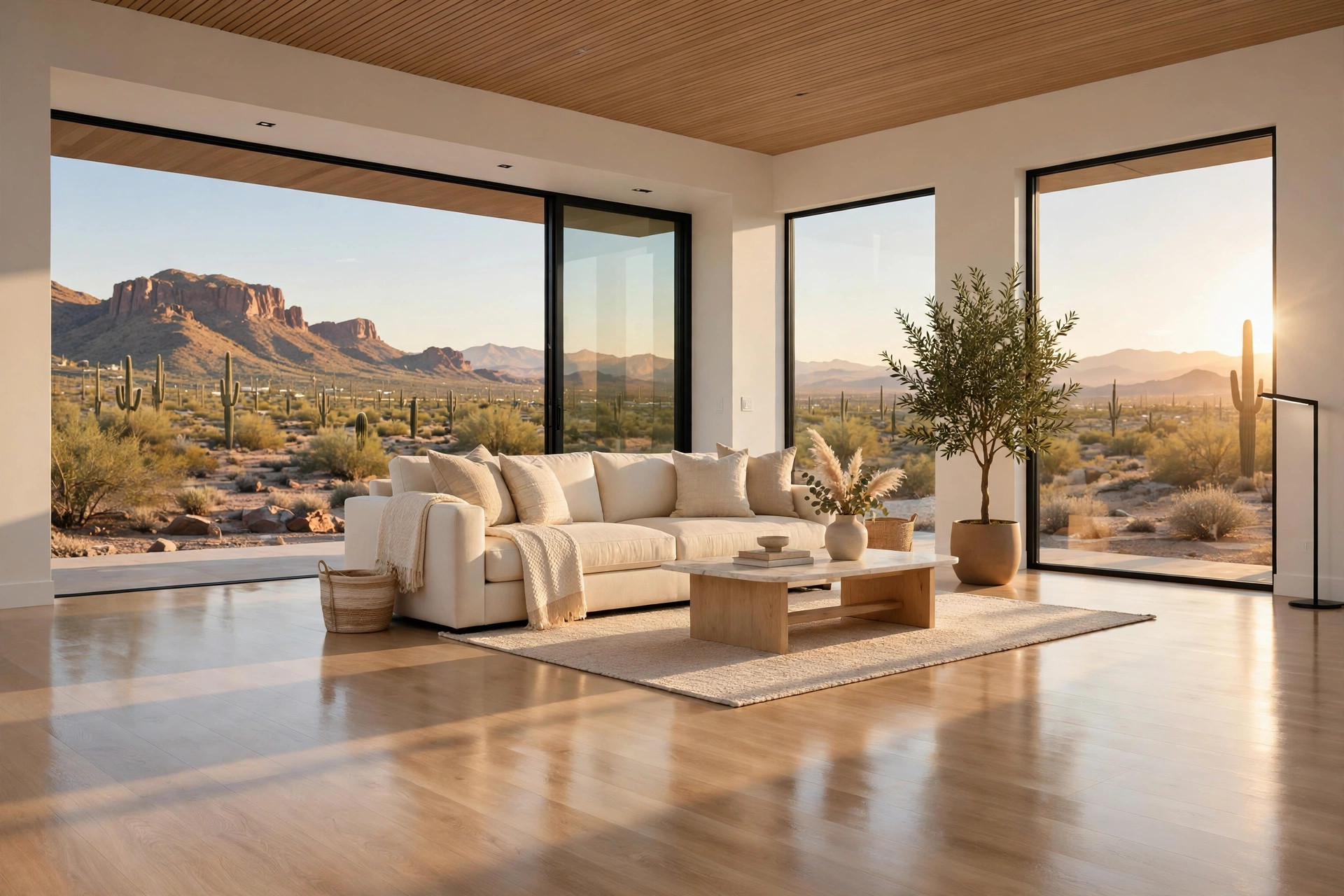
Finished LVP floor in an Arizona main living area
LVP — finished main floor, our work
Finished engineered hardwood floor in an Arizona master suite
Engineered hardwood — finished master suite, our work

Which one for which home

Kitchens, bathrooms & laundry rooms

LVP — never engineered wood near water

Sinks, dishwashers and washers leak eventually. One floor is waterproof through its whole body; the other is real wood. That is the whole argument.

Slab home that wants real wood

Engineered hardwood — this is its home turf

It glues straight to a prepared, moisture-tested slab and its layered core barely moves in dry air. It is the wood floor Arizona installers actually put on slabs.

Homes with dogs (especially big ones)

LVP — SPC core, 20 mil wear layer

Accidents cannot swell it, nails meet a commercial-grade wear layer, and the rigid core resists dents from launch loads at the back door.

Long-term home that wants a renewable floor

Engineered — with a thick sawn wear layer

A wear layer around 3 to 4 millimeters can typically be refinished once or twice, which is a second life LVP never gets. Check that spec before you buy; thin veneer cannot be refinished at all.

Whole-house on a tight budget

LVP, and it is not close

$4.50–$9 a square foot installed against $7–$13 — across a whole house on a slab, that gap pays for a lot of other rooms. One waterproof floor, no wet/dry transitions.

Still weighing laminate too?

The third chair at this table is laminate — cheapest of all, and the one water beats first. We ran that comparison too.

Laminate vs LVP

LVP vs engineered questions

Can engineered hardwood be glued directly to a concrete slab?+

Yes — that is its standard installation in Arizona, provided the slab passes a moisture test and is prepped flat. If moisture readings are high, a mitigation system goes down first. Most engineered products are approved by their manufacturers for glue-down over concrete.

Which is waterproof, LVP or engineered hardwood?+

LVP. It is waterproof through its entire body, so spills and pet accidents sit on the surface until you clean them. Engineered hardwood is real wood, and wood absorbs and releases moisture — its layered core resists shrinking and movement, not soaking.

Can engineered hardwood be refinished? Can LVP?+

Engineered sometimes, LVP never. LVP has no refinish option — a worn-through print layer means replacing planks. Engineered hardwood with a thick sawn wear layer, around 3 to 4 millimeters, can typically be sanded and refinished once or twice; thin veneer products cannot, so check the wear layer spec before you buy.

Which costs more to install in Phoenix, LVP or engineered hardwood?+

Engineered hardwood. Per Honest & Affordable's published 2026 Phoenix cost guide, LVP runs $4.50 to $9 per square foot installed and engineered hardwood $7 to $13. Across a whole house, that gap is usually thousands of dollars.

Which handles Arizona heat better, LVP or engineered hardwood?+

They fail differently. Vinyl expands with heat — lower-quality LVP can soften and open joints in extreme surface heat, which is why rigid SPC cores, proper expansion gaps and a reasonably controlled home temperature matter. Engineered hardwood's layered construction cancels most movement, so its gaps stay hairline-tight across seasons. Both are Arizona-viable; neither forgives a skipped moisture test or slab prep.

LVP or engineered hardwood for a house with big dogs?+

LVP with a rigid SPC core and a 20 mil wear layer. Accidents cannot swell a waterproof core, nails meet a commercial-grade wear layer, and the rigid core resists dents from heavy dogs. Engineered hardwood's finish takes that same daily traffic with only a limited refinish — once or twice, and only on a thick wear layer — as its recovery.

Still torn? Bring us your rooms

Bring your rooms, your dogs and your budget to a free consultation — we'll price the option that fits, in writing, with samples in hand. Or run both through the cost calculator first.

Prefer to talk? Call (602) 854-8363 — Mon–Sat, 8 AM–8 PM.