LVP vs laminate
LVP vs Tile vs Laminate: The Honest Comparison for Desert Homes
Honest & Affordable Floor Covering · Arizona 5 min read
LVP vs laminate vs tile is not a beauty contest in Arizona — it is a failure-mode contest. Here is how each floor actually fails in desert heat, sun, dust, and slab moisture, and which one wins room by room.
LVP vs laminate vs tile: which is best for a desert home?
For most Arizona homes, LVP vs laminate is not close: LVP wins, because laminate's fiberboard core swells when moisture reaches it and LVP is waterproof through its entire body. Tile beats both on heat, sun, and lifespan. The honest order for Phoenix is tile first for permanence, LVP first for comfort and value, and laminate only in dry, low-risk rooms where budget rules.
Marketing compares these floors by looks and price. Installers compare them by how they fail. In the desert, every floor fails by water, sun, or dust — so compare the failure modes, not the brochures.
Failure by water and slab moisture
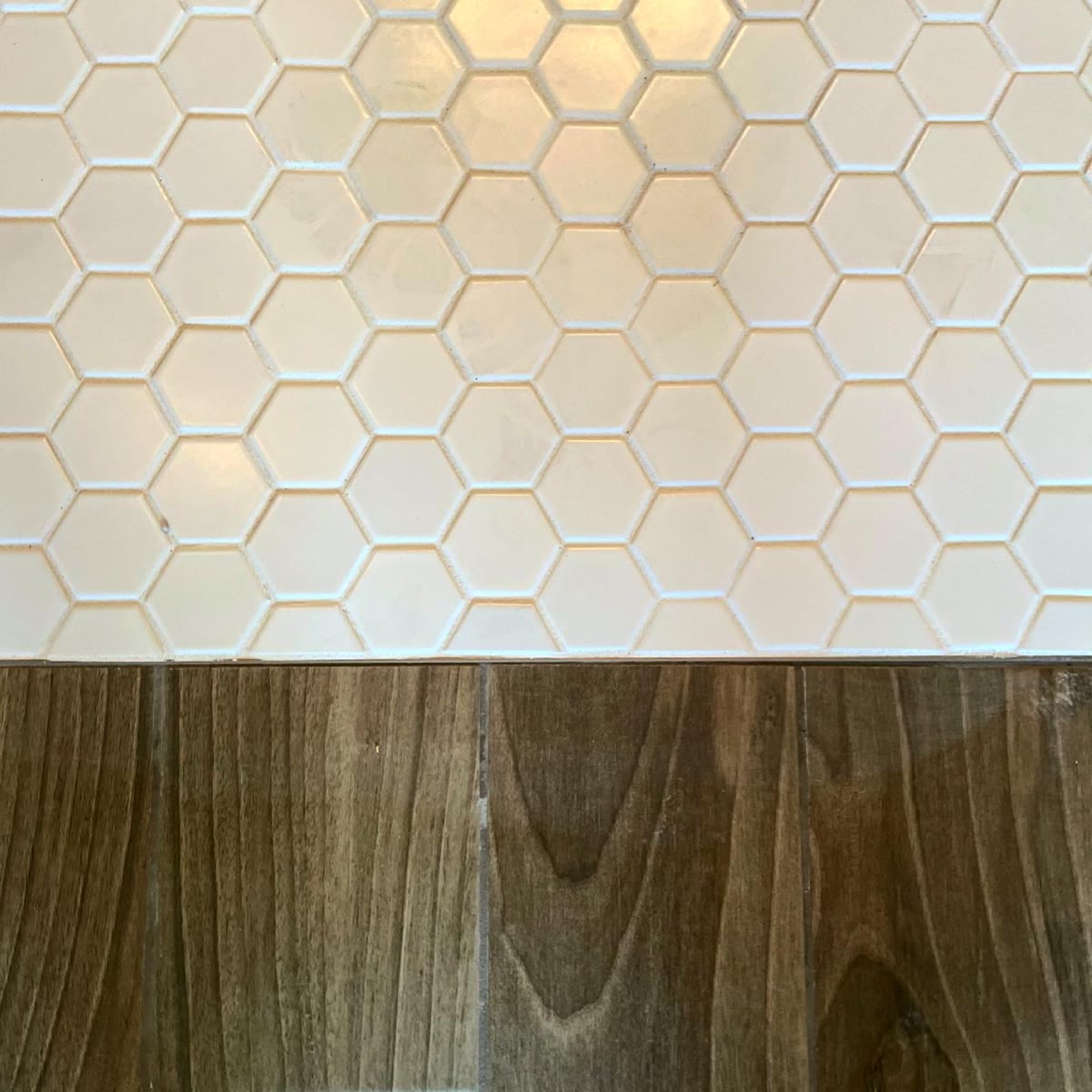
Laminate's weakness is its core. A slow plumbing leak, a pet accident left overnight, or moisture wicking from the slab swells the fiberboard edges, and swollen laminate does not recover. LVP cannot swell; its failure mode with moisture is different — vapor trapped under a floating floor can grow mildew or lift adhesive on glue-down jobs, which is why slab moisture testing matters even for a waterproof floor.
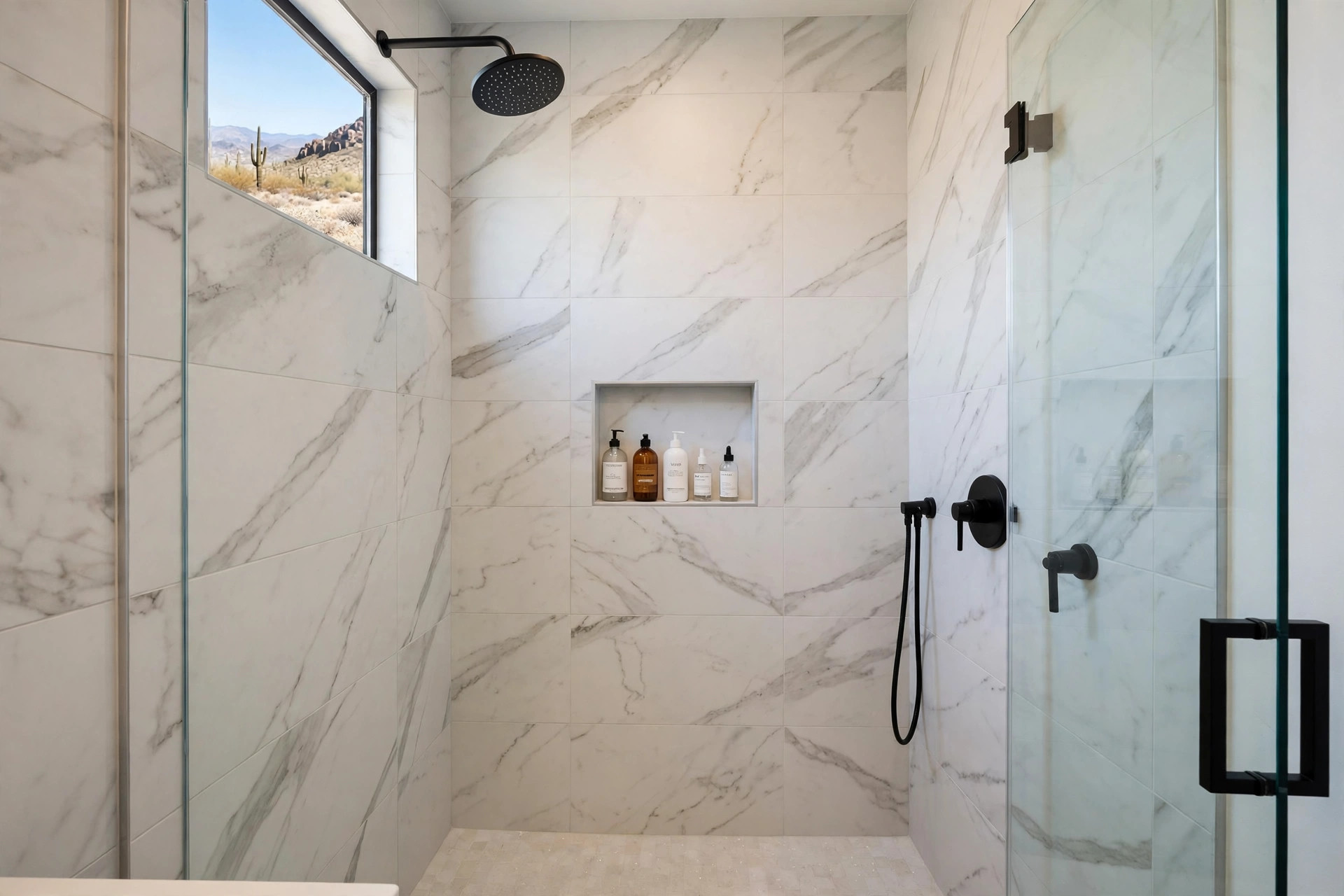
Tile is the most water-tolerant surface of the three, but grout is not waterproof. Unsealed grout and cracked caulk at tubs and sinks let water through to the substrate, where it causes the damage you cannot see.
Failure by sun, heat, and dust
Arizona sun through big sliders can push a floor's surface far above room temperature. Lower-quality vinyl softens and expands in that heat, opening joints or buckling if the expansion gap was skimped. Laminate handles heat fine but its printed surface can fade unevenly where rugs sit. Tile ignores sun entirely, which is why it dominates in Arizona rooms and sun-facing entries.
Dust is the slow enemy. Desert dust is mineral grit; dragged under shoes and furniture it acts like fine sandpaper. Tile and a 20 mil wear layer shrug it off. Thin wear layers and soft laminate surfaces show traffic lanes years earlier.
Feel, sound, and resale
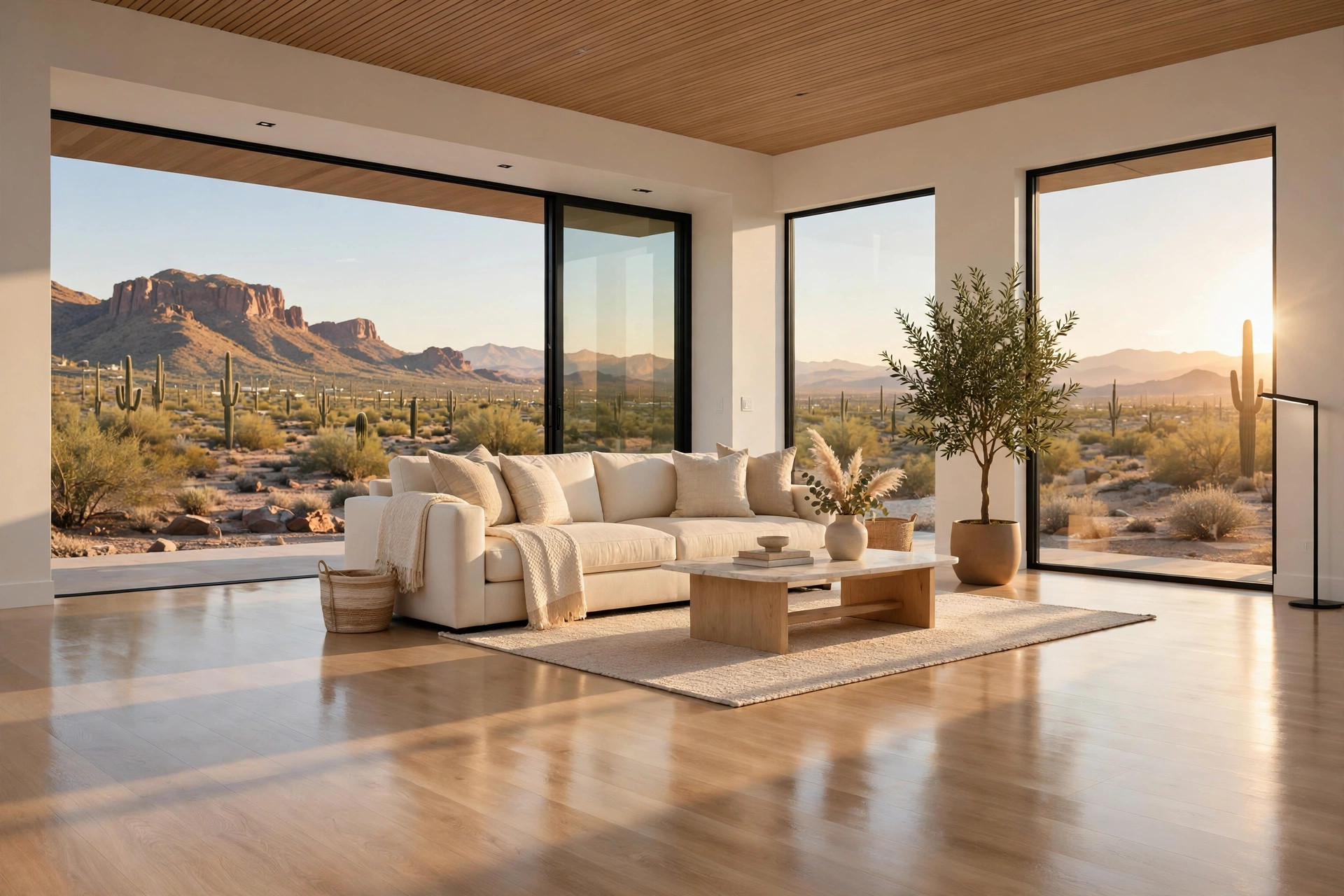
Tile feels premium and cool but is hard and loud. LVP is warmer, quieter, and easier on dropped dishes and aging knees. Laminate can sound hollow and clicky when you walk it, which reads as cheap in an otherwise nice home. For resale in the East Valley, tile and quality LVP both photograph and appraise well; dated or swollen laminate actively hurts a listing.
Cost order installed is usually laminate lowest, LVP close behind, tile highest — but tile's lifespan is two to three times the others, which flips the value math on a home you plan to keep.
The room-by-room verdict
Bathrooms, laundry, and kitchens: tile or LVP, never laminate near the sink and dishwasher. Living and dining: tile for permanence, LVP for comfort and budget. Bedrooms: LVP or engineered wood for warmth; laminate is acceptable here if budget demands. Sunrooms: tile, then SPC LVP. Whole-house continuity on a slab: LVP is the easiest single-floor answer, tile the most bulletproof.
Whichever you pick, the desert rules are the same: test the slab, prep it flat, acclimate the product 48 to 72 hours, and leave the expansion space the manufacturer specifies.
Get a free, exact estimate
Still torn between two floors? Bring your rooms, your dogs, and your budget to a free consultation with Honest & Affordable Floor Covering and get an honest, upfront quote for the option that fits. Call (602) 854-8363. Based in the East Valley — Gilbert, Mesa, Chandler, Ahwatukee, and Paradise Valley — and serving homeowners across Arizona.
Homeowners across Arizona rate Honest & Affordable five stars on Google for honest pricing, on-time crews and floors built to last. 20+ years of experience, fully licensed & insured.
Frequently asked questions
Which is more waterproof, LVP or laminate?+
LVP, decisively. Its core is plastic composite and cannot swell. Laminate has a fiberboard core that absorbs water at seams and edges; water-resistant laminate lines slow that down but do not eliminate it.
Does tile crack on a concrete slab in Arizona?+
Tile cracks when the slab moves and the installation cannot absorb it — missing movement joints, poor thinset coverage, or no crack-isolation membrane on a cracked slab. A properly prepped slab with full mortar coverage and soft joints where required rarely cracks.
LVP or laminate for a house with big dogs?+
LVP with a 20 mil wear layer. Dog nails do not scratch through quality wear layers quickly, accidents cannot swell the core, and the rigid SPC version also resists dents from heavy dogs better than laminate surfaces.
Ready for new floors?
Free consultation, honest upfront quote — no hidden fees. Serving all of Arizona from the East Valley.