LVP installation cost per square foot
LVP Installation Cost Per Square Foot: The Full 2026 Breakdown
Honest & Affordable Floor Covering · Arizona 5 min read
LVP installation cost per square foot in 2026 typically runs $4.50 to $9 installed in Phoenix. This breaks down where every dollar goes: material, labor, removal, prep, and trim.
What is the LVP installation cost per square foot in 2026?
In the Phoenix market, LVP installation cost per square foot typically totals $4.50 to $9 installed in 2026. That range covers the plank itself at roughly $2 to $5 per square foot, professional labor at $1.50 to $3.50, and basic underlayment or moisture protection where needed. These are typical market ranges; your exact price depends on the product spec and the condition of your slab.
Where do quotes land inside that range? A mid-grade SPC plank with a 20 mil wear layer, installed over a flat, dry slab in a straightforward layout, usually lands in the middle. Diagonal layouts, multiple transitions, and heavy prep push toward the top.
Where each dollar actually goes
Material is the biggest slice, and the spec matters more than the brand name. You are paying for core type (SPC costs a bit more than WPC in many lines), wear layer thickness, and whether underlayment is attached. Labor covers layout, cuts, stairs if any, and the detail work at doorways and cabinets that makes an install look finished instead of floated.
The invisible slice is prep: grinding high spots, filling low spots, and moisture mitigation on the slab. It is unglamorous, and it is the difference between a silent, solid floor and one that clicks and flexes within a year.
Removal and disposal: the add-on nobody budgets
Most LVP quotes assume a bare slab. Getting there costs money: pulling carpet and pad is the cheap end, while removing old tile, glued-down wood, or layers of sheet vinyl adds labor and dump fees, typically $1 to $2.50 per square foot and more for tile demolition with dust control.
Ask whether removal is in the quote before you compare prices. A bid that includes demo and haul-away can look higher than one that quietly excludes it, right up until install day.
Trim, transitions, and stairs
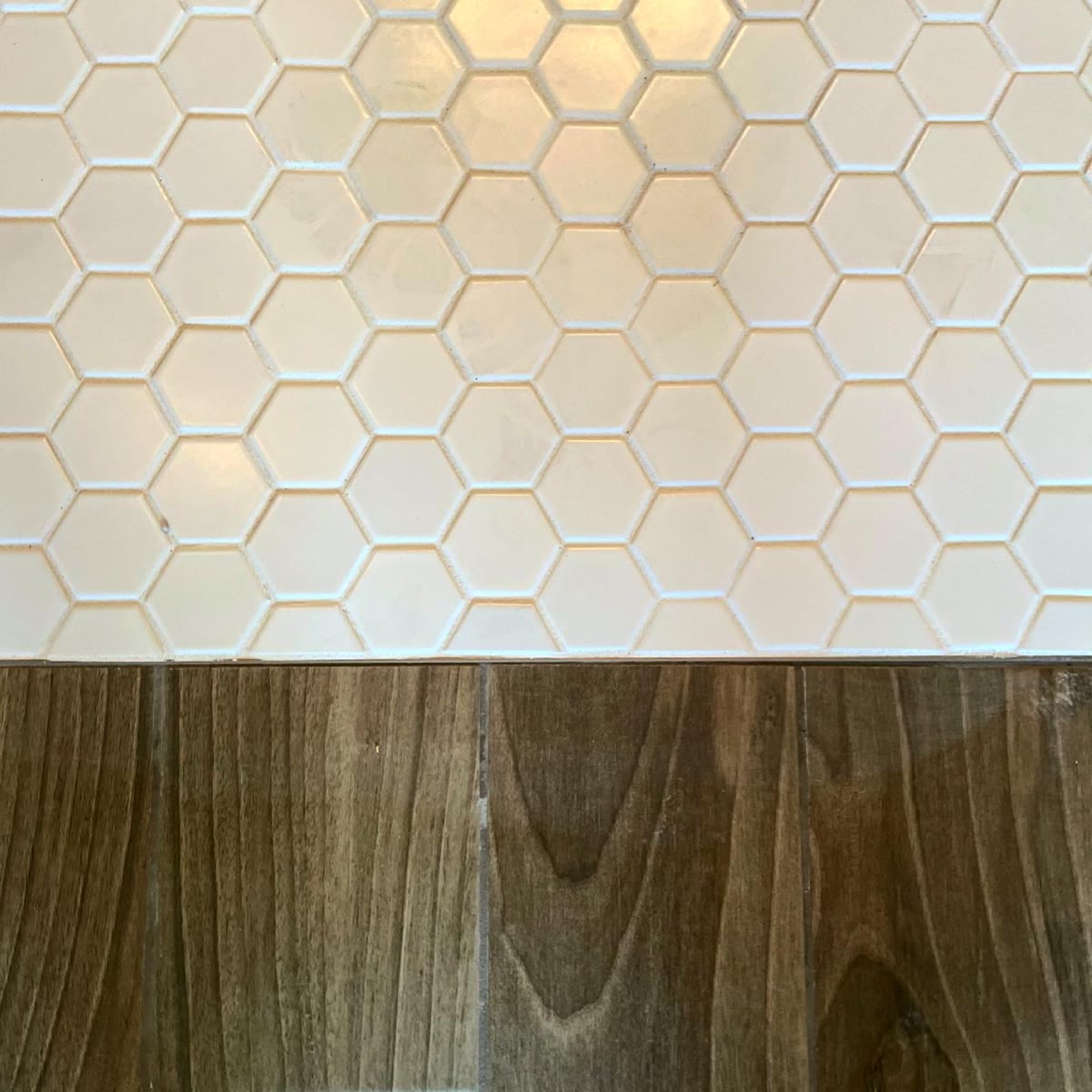
Baseboards have to come off and go back on, or get replaced — that work is priced per linear foot and is frequently a separate line. Transition strips at tile or carpet thresholds, stair nosing, and quarter round where it is used all add small amounts that surprise homeowners when they were never mentioned.
Stairs deserve special attention. Wrapping steps in LVP with proper nosing is detailed work and is often quoted per step rather than per square foot, so a two-story home should ask for that number explicitly.
When the cheapest quote is the expensive one
A very low per-foot price usually means something was cut: no moisture test, minimal slab prep, a thin 6 or 12 mil wear layer product, or trim work excluded. In Arizona, the failure that follows is predictable — planks that gap in the dry months, buckle where sun heats them, or telegraph every slab imperfection through a too-thin core.
The wear layer is the clearest example. Stepping from 12 mil to 20 mil typically adds well under a dollar per square foot on material, and it is the layer that decides whether the floor looks good in year ten.
Get a free, exact estimate
The fastest way past ranges is a number written for your rooms and your slab. Honest & Affordable Floor Covering provides a free consultation and an honest, upfront quote that shows material, labor, removal, and trim as separate lines. Call (602) 854-8363. From the East Valley — Gilbert, Mesa, Chandler, Ahwatukee, and Paradise Valley — the team serves homeowners all across Arizona.
Homeowners across Arizona rate Honest & Affordable five stars on Google for honest pricing, on-time crews and floors built to last. 20+ years of experience, fully licensed & insured.
Frequently asked questions
Can you install LVP over existing tile?+
Often, yes, if the tile is sound, flat, and well bonded. The grout lines usually need to be skimmed level, and the added height must clear doors and appliances. It saves demolition cost, but a loose or uneven tile field has to come up instead.
How long should LVP acclimate before installation in the desert?+
Plan on 48 to 72 hours inside the home at normal living temperature before installation. Acclimation lets the planks adjust to your home's heat and dry air, and skipping it is a leading cause of gapping and buckling — and can void the product warranty.
Does LVP need underlayment on a concrete slab?+
Many SPC planks come with attached pad, but a slab still needs a moisture check and, where readings are high, a moisture barrier or mitigation system. Underlayment does not fix a wet slab; it only quiets and cushions the floor.
Ready for new floors?
Free consultation, honest upfront quote — no hidden fees. Serving all of Arizona from the East Valley.