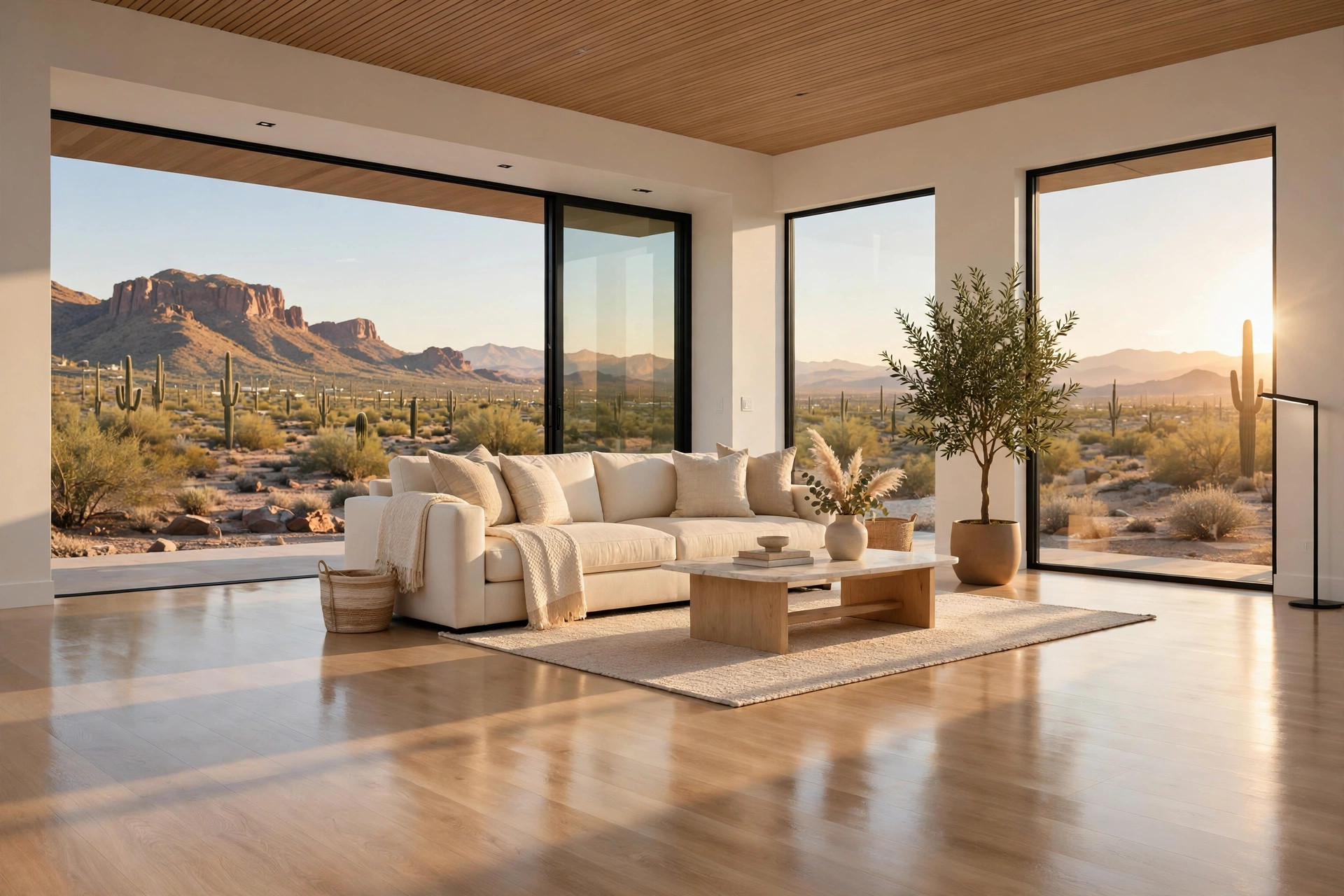
best flooring for Arizona heat
Best Flooring for Arizona Heat: What Actually Survives a Phoenix Summer
Honest & Affordable Floor Covering · Arizona 5 min read
The best flooring for Arizona heat is porcelain tile for coolness and durability, with quality SPC-core LVP a close second. Here is how each material actually handles 115-degree summers, dry air, and desert sun.
What is the best flooring for Arizona heat?
Porcelain tile is the best flooring for Arizona heat. It stays cool underfoot, does not expand or fade the way other materials can, shrugs off dust and sand, and lasts decades on a concrete slab. A quality SPC-core luxury vinyl plank is a close second: it is softer and warmer than tile, waterproof, and more forgiving of slab movement, as long as it is installed with proper expansion space.
The material that struggles most in Phoenix is solid hardwood. The desert's extremely dry air pulls moisture out of solid wood, and the boards shrink, gap, and sometimes cup. It can be done, but it fights the climate every day.
Tile: the floor the desert cannot hurt
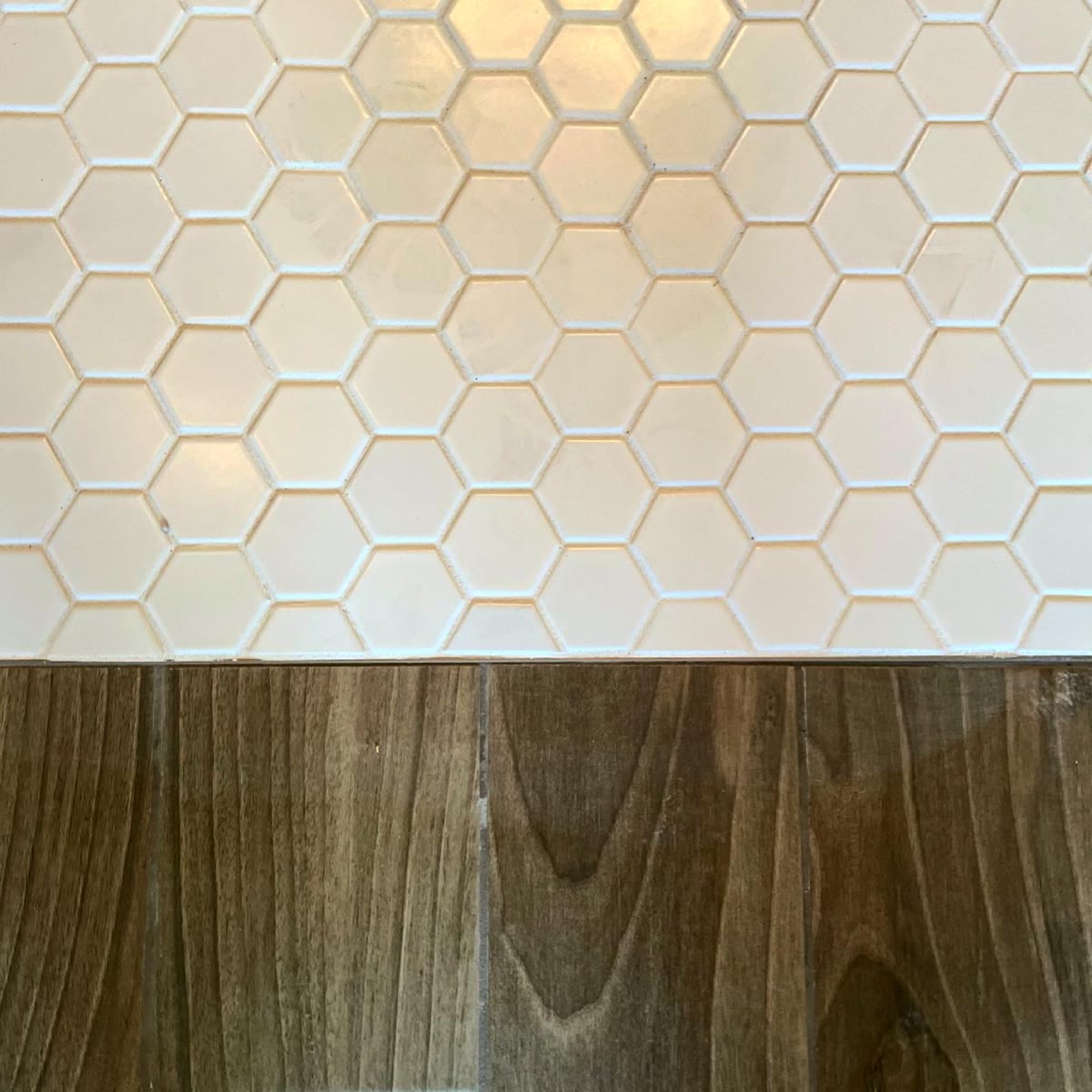
Tile's advantages in Arizona stack up fast. It holds the cool temperature of the slab, which matters when it is 110 outside. Sun blasting through a west-facing window does not fade it. Desert dust, which is fine and abrasive, does not scratch it the way it can softer surfaces. Wood-look porcelain tile is popular across the Valley for exactly this reason: the look of wood with none of wood's climate problems.
The trade-offs are feel and hardness. Tile is unforgiving if you drop a glass, harder on knees and feet during long kitchen sessions, and grout lines need sealing and occasional maintenance, especially with Maricopa County's hard water.
LVP: the practical runner-up, with rules
Luxury vinyl plank works well in Arizona when two rules are respected. First, choose a rigid SPC core for rooms with big temperature swings or heavy sun; it moves less than softer WPC cores in heat. Second, the installation must leave proper expansion gaps and the home's temperature should stay reasonably controlled — a house left at 95 degrees all summer while vacant is hard on any floating floor.
LVP is waterproof, quieter and softer than tile, faster to install, and kind to budgets. For bedrooms, living rooms, and homes with dogs, it is often the smarter buy even if tile wins on pure heat resistance.
Why solid hardwood loses to dry air
Hardwood is hygroscopic: it absorbs and releases moisture to match the air. Phoenix indoor humidity often sits far below what solid wood prefers, so boards lose moisture, shrink across their width, and open visible gaps, especially in winter when heating dries the air further. On a concrete slab, solid wood also needs a plywood subfloor or special moisture systems, adding height and cost.
Engineered hardwood solves most of this. Its layered construction resists shrinking and it can be glued directly to a prepared slab, which is why it is the wood floor Arizona installers actually recommend.
Room-by-room picks for a Phoenix home
Kitchens, entries, and bathrooms: tile or SPC LVP, with tile ahead where sun and water are constant. Living rooms: either, based on feel and budget. Bedrooms: engineered hardwood or WPC-core LVP for a warmer, quieter floor. Sunrooms and Arizona rooms with big temperature swings: tile first, SPC second, and avoid solid wood and laminate entirely.
Whatever you choose, the slab decides the outcome. A moisture test, proper prep, and 48 to 72 hours of acclimation in the home matter more than the brand on the box.
Get a free, exact estimate
Not sure which floor fits your home's sun, slab, and budget? Honest & Affordable Floor Covering offers a free consultation with an honest, upfront quote — no pressure and no hidden fees. Call (602) 854-8363. Based in the East Valley, the team serves Gilbert, Mesa, Chandler, Ahwatukee, Paradise Valley, and homeowners across Arizona.
Homeowners across Arizona rate Honest & Affordable five stars on Google for honest pricing, on-time crews and floors built to last. 20+ years of experience, fully licensed & insured.
Frequently asked questions
Does LVP fade in direct sunlight?+
It can over years of intense exposure, especially darker colors behind west-facing glass. Quality LVP has UV protection in the wear layer, and SPC cores handle the heat better. Window film or shades on the worst windows help any floor.
What flooring stays coolest in an Arizona home?+
Porcelain and ceramic tile stay coolest because they pull temperature from the concrete slab. That cool feel is a real energy and comfort advantage in Phoenix summers, though some homeowners find it cold on winter mornings.
Can hardwood floors survive in Phoenix?+
Engineered hardwood does very well when glued to a properly prepared, moisture-tested slab. Solid hardwood is the risky option in dry desert air because it shrinks and gaps; engineered construction is built to resist exactly that.
Ready for new floors?
Free consultation, honest upfront quote — no hidden fees. Serving all of Arizona from the East Valley.