engineered hardwood over concrete slab
Engineered vs Solid Hardwood on a Concrete Slab: The Arizona Answer
Honest & Affordable Floor Covering · Arizona 5 min read
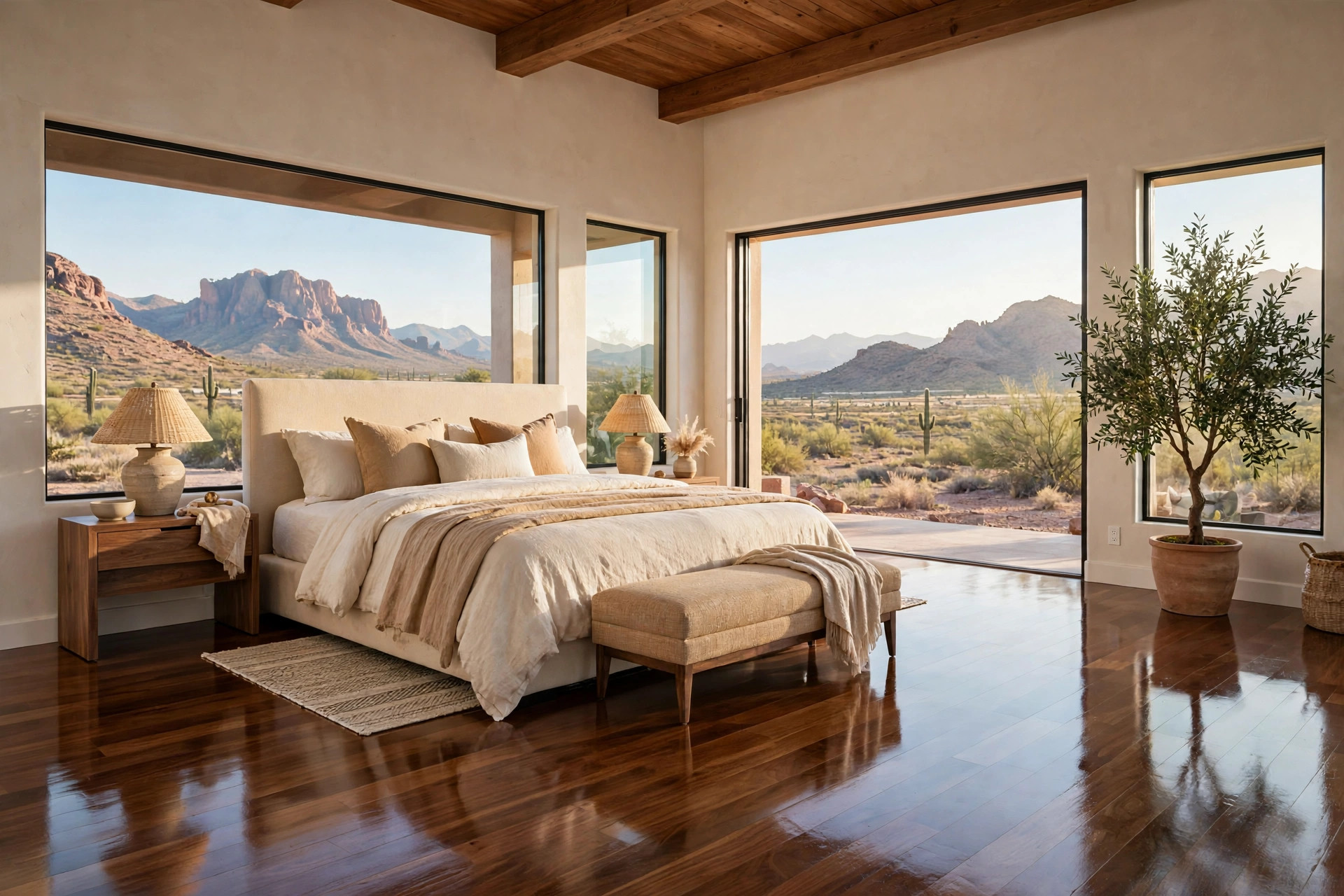
Engineered hardwood over a concrete slab is the Arizona answer: it glues straight to a prepared slab and barely moves in dry desert air, while solid hardwood needs a plywood subfloor and still gaps every winter. Here is why, and when solid still makes sense.
Engineered or solid hardwood on a concrete slab?
In Arizona, engineered hardwood wins on a concrete slab, and it is not particularly close. Engineered planks are built in layers with a cross-grained core that barely moves when humidity changes, and they can be glued directly to a prepared, moisture-tested slab. Solid hardwood, by contrast, cannot go straight onto concrete at all — it needs a plywood subfloor or a specialized moisture system floated on top of the slab, adding height, cost, and one more thing to go wrong.
That is before the desert itself weighs in. Phoenix indoor air is some of the driest in the country, and solid wood gives up moisture to that air, shrinks across its width, and opens gaps. Engineered construction was designed to resist exactly that movement, which is why it is the hardwood Arizona installers actually put on slabs.
Why the slab rules solid wood out of most homes
Concrete is not dry just because it feels dry. A slab constantly releases moisture vapor, and solid hardwood sitting over it needs that vapor stopped — typically with a moisture barrier plus a plywood subfloor nailed or floated above the slab. That build-up raises the finished floor noticeably, which then ripples into door undercuts, appliance fits, transitions to tile areas, and stair geometry.
Engineered hardwood skips the whole stack. With a moisture test first and mitigation if readings run high, the planks glue straight to the slab — lower profile, fewer materials, and no plywood layer to squeak or telegraph problems later.
The dry-air problem: gapping
Hardwood floor gapping is the complaint that follows solid wood around the desert. Wood shrinks across its grain as it loses moisture, and a wide solid plank can shrink enough over a dry Phoenix winter — heating running, indoor humidity in the teens — to open visible gaps across the floor. Come summer the boards swell back, and the yearly cycle works joints and fasteners loose.
Engineered planks move a fraction as much because their layers run in opposite directions and cancel each other's movement. Gaps stay hairline-tight across seasons, which is most of what homeowners actually see and feel day to day.
Acclimation: the step the desert makes mandatory
Both floors need to acclimate, but the stakes differ. Engineered hardwood should sit in the home, at normal living temperature, for the period the manufacturer specifies — commonly several days — while the installer verifies the slab's moisture level and the wood's moisture content are within the product's limits. Installing any wood floor the day it is delivered, straight off a hot truck, is how a good product gets blamed for an installation shortcut.
On a slab, the moisture test is part of acclimation. If readings come back high, the answer is a moisture mitigation system under the floor — not hope, and not a different start date.
When solid hardwood still makes sense
Solid wood has a real case in the minority of Arizona homes with a wood subfloor — some second stories and older construction — where it can be nailed down the traditional way and sanded and refinished for decades. A few homeowners also choose it for a specific look and accept a humidifier and seasonal gaps as the price.
On a ground-floor Phoenix slab, though, solid asks you to pay more, build the floor higher, and fight the climate, in exchange for advantages that mostly matter above grade. That trade rarely survives an honest look at the invoice.
Get a free, exact estimate
Choosing between the two for your slab? Honest & Affordable Floor Covering starts with a free consultation and an honest, upfront quote — including the moisture test and slab prep your floor needs, with no hidden fees. Call (602) 854-8363. Based in the East Valley — Gilbert, Mesa, Chandler, Ahwatukee, and Paradise Valley — and serving homeowners across Arizona.
Homeowners across Arizona rate Honest & Affordable five stars on Google for honest pricing, on-time crews and floors built to last. 20+ years of experience, fully licensed & insured.
Frequently asked questions
Can engineered hardwood be glued directly to a concrete slab?+
Yes — that is its standard installation in Arizona, provided the slab passes a moisture test and is prepped flat. If moisture readings are high, a mitigation system goes down first. Most engineered products are approved by their manufacturers for glue-down over concrete.
Why are my hardwood floors gapping in winter?+
Dry heated air pulls moisture out of wood and the boards shrink across their width. Solid planks gap the most; engineered planks move far less. Small seasonal gaps that close in summer are normal for solid wood; wide permanent gaps suggest the floor was installed too wet or without acclimation.
Can engineered hardwood be refinished like solid?+
Some can. Engineered floors with a thick sawn wear layer — around 3 to 4 millimeters — can typically be sanded and refinished once or twice; thin veneer products cannot. If refinishing matters to you, check the wear layer spec before you buy, not after.
Ready for new floors?
Free consultation, honest upfront quote — no hidden fees. Serving all of Arizona from the East Valley.