The honest comparison · Arizona edition

Laminate vs Hardwood

Marketing compares these floors by looks and price. Installers compare them by how they fail. In Arizona, laminate fails by water — and solid hardwood fights a second enemy, dry desert air on a concrete slab. Here is the failure-mode comparison, the pros and cons of each, and a straight verdict for your kind of home.

5.0 · 47 Google reviews Licensed & insured We install both — no dog in this fight
Finished hardwood floor in an Arizona bedroom, installed by Honest & Affordable

The short answer

This one splits by room and by what “hardwood” means on your slab. Laminate wins on installed cost and heat tolerance, in dry rooms where its fiberboard core never gets tested. Hardwood wins on real feel and refinishing — but on a Phoenix concrete slab, the hardwood that works is engineered: solid cannot go straight onto concrete, and dry desert air shrinks and gaps it. Everything below is the evidence, drawn from our published Arizona flooring guides.

Laminate

$4–$8 / sq ft installed · published Phoenix range

Pros

  • Lowest installed cost of the two ($4–$8/sq ft, published)
  • Handles Arizona heat without softening
  • Convincing wood look for dry living rooms and bedrooms
  • Fast, clean floating installation

Cons

  • Fiberboard core swells with water — and never recovers
  • Pet accidents and slab moisture are real risks
  • Printed surface can fade unevenly in strong sun
  • No refinish: a worn printed surface means replacement
Our laminate service

Hardwood

$7–$13 engineered · $9–$16 solid / sq ft installed · published Phoenix ranges

Pros

  • Real wood — no printed picture of wood
  • Refinishable: solid for decades, thick-wear-layer engineered once or twice
  • Engineered form glues directly to a prepared slab and barely moves in dry air
  • Engineered is the wood floor Arizona installers actually recommend

Cons

  • Solid fights Phoenix: dry air shrinks it, gaps it, and can cup it
  • Solid cannot go straight on concrete — plywood subfloor or moisture system, adding height and cost
  • Top of the published ranges: engineered $7–$13, solid $9–$16 per sq ft installed
  • Needs a slab moisture test and the acclimation period the manufacturer specifies — never installed the day it arrives
Our hardwood service

Head to head, by Arizona failure mode

FactorLaminateHardwoodEdge
Water & spillsFiberboard core swells when moisture reaches seams and edges — and swollen laminate does not recover.Wood is hygroscopic: it absorbs and releases moisture to match the air. Standing water and slow leaks are a risk this floor carries for life, not a simple cleanup. Tie
Sun & UV fadeHandles heat well, but the printed surface can fade unevenly where rugs sit.There is no printed picture to fade in rug lines. Its sun-room enemy is different: the dry air that comes with the sun, which shrinks boards and opens gaps. Hardwood
Slab moisture (on concrete)Moisture wicking up from the slab attacks the fiberboard core from below.Solid hardwood cannot go straight onto concrete at all — it needs a plywood subfloor or a specialized moisture system. Engineered hardwood is the slab form: it glues directly to a prepared, moisture-tested slab. Hardwood
HeatHandles Arizona heat fine, without softening.Heat itself is not the issue — the dry air is. Phoenix dry air pulls moisture out of solid wood, and the boards shrink, gap, and sometimes cup. Solid hardwood is the material that struggles most in Phoenix. Laminate
Desert grit & scratchesSofter surfaces show traffic lanes from dragged-in grit years earlier — and there is no way to sand a print back.Grit scratches real wood too, but the damage is not automatically permanent: a refinishable floor can have its traffic lanes sanded out instead of lived with. Hardwood
DogsSurface can scratch and dent under big-dog launch loads, and an accident left overnight can swell the core at the seams.Nails test the finish every day and an accident is moisture sitting on a moisture-sensitive material. Hardwood's one recovery is refinishing — damage can be sanded out rather than replaced. Tie
Refinishing & lifespanOnce the printed surface is worn, the plank is done — there is no wood underneath to sand back.Solid hardwood can be sanded and refinished for decades in the right home. Engineered depends on the spec: a thick sawn wear layer, around 3 to 4 millimeters, can typically be refinished once or twice; thin veneer cannot. Hardwood
Feel & soundCan sound hollow and clicky underfoot, which reads as cheap in a nice home.Real wood underfoot — no printed picture, no hollow laminate sound. In bedrooms, engineered hardwood is picked for a warmer, quieter floor. Hardwood
Installed cost$4–$8 per sq ft installed — the lowest ticket here, per our published Phoenix cost guide.Engineered hardwood $7–$13 per sq ft installed; solid hardwood $9–$16. On a slab, solid also adds the plywood or moisture-system build-up underneath. Laminate

Cost figures are the installed ranges from our published guide “Flooring Installation Cost in Phoenix (2026)”. Slab and dry-air notes are from “Engineered vs Solid Hardwood on a Concrete Slab” and “Best Flooring for Arizona Heat”.

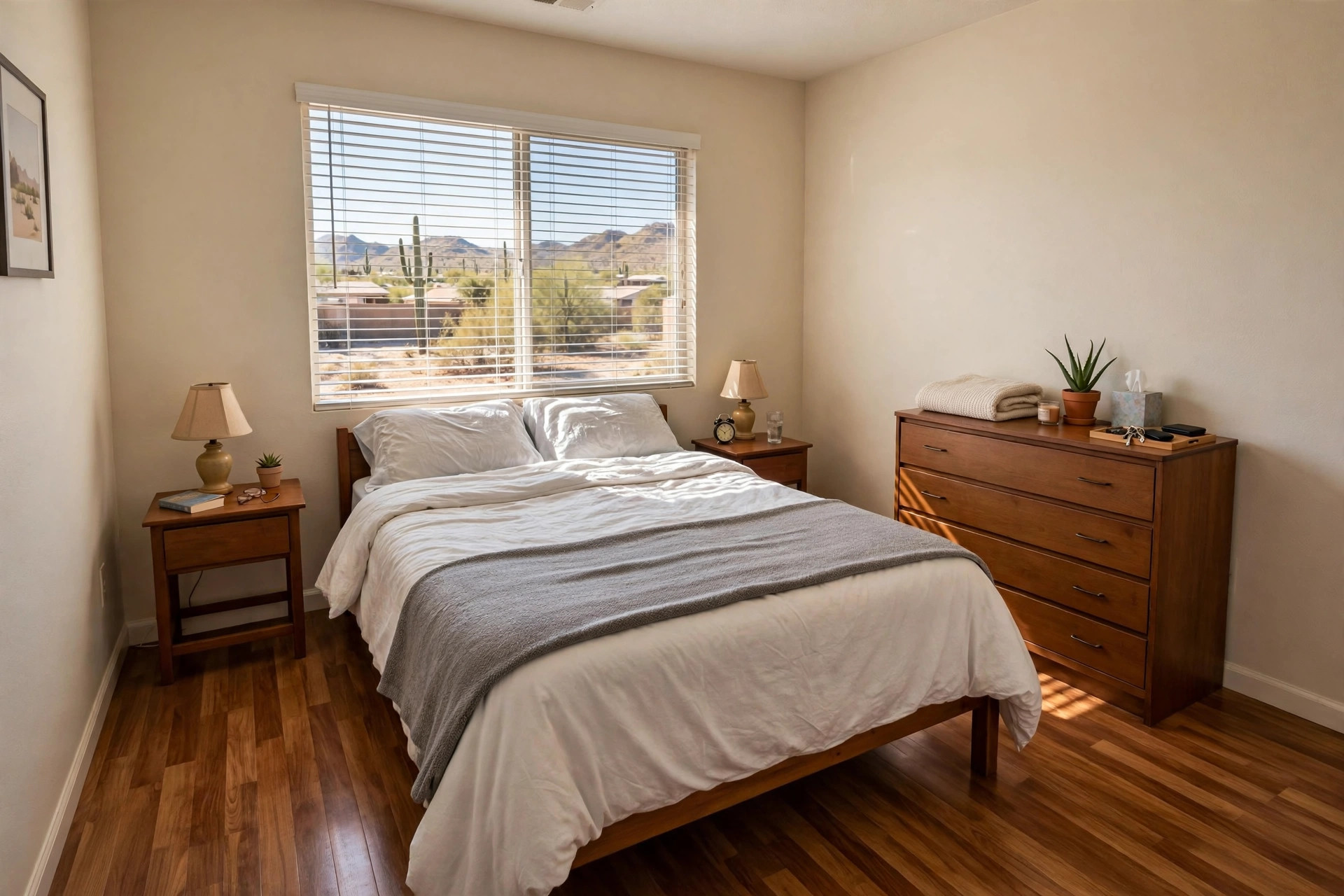
Finished laminate floor in an Arizona bedroom
Laminate — finished bedroom, our work
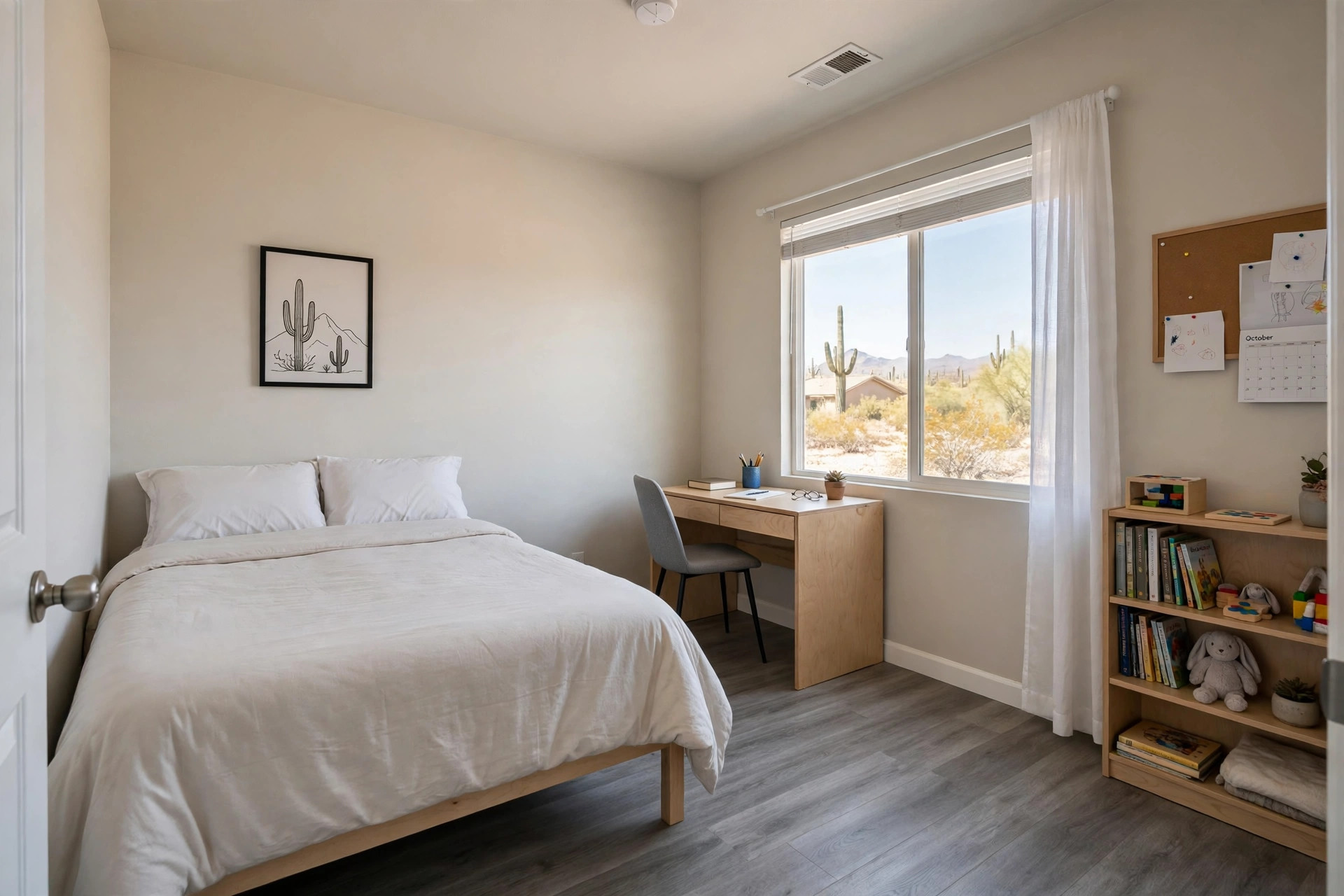
Finished hardwood floor in an Arizona bedroom
Hardwood — finished bedroom, our work

Which one for which home

Ground-floor slab, whole house

Engineered hardwood — not solid, not laminate

It glues straight to a prepared, moisture-tested slab, its layered construction barely moves in dry air, and gaps stay hairline-tight across seasons. Laminate's core is the wrong bet against slab moisture.

Dry bedrooms on a tight budget

Laminate is acceptable here

Low moisture risk, low traffic, and the lowest installed cost. This is the one room type where laminate's weakness rarely gets tested.

Second story or wood subfloor, long-term home

Solid hardwood earns its price here

Where it can be nailed down the traditional way, solid can be sanded and refinished for decades. That is the one Arizona setting where its advantages are real.

Homes with big dogs

Neither is the first choice — LVP is

Laminate accidents can swell the core and real wood's finish takes the daily beating. Waterproof SPC LVP with a 20 mil wear layer is the dog floor; we wrote the whole page on it.

Sunrooms & Arizona rooms

Neither — tile first, SPC LVP second

Big temperature swings and blasting sun are the worst case for both: laminate's print fades unevenly and solid wood shrinks and gaps. Tile ignores sun entirely.

On a slab and set on hardwood?

Read this before you buy a single plank — why the hardwood Arizona installers put on concrete is engineered, not solid.

Engineered vs solid on a slab

Laminate vs hardwood questions

Can hardwood floors survive in Phoenix?+

Engineered hardwood does very well when glued to a properly prepared, moisture-tested slab. Solid hardwood is the risky option in dry desert air because it shrinks and gaps; engineered construction is built to resist exactly that.

Can solid hardwood go directly on a concrete slab?+

No. Solid hardwood needs a plywood subfloor or a specialized moisture system floated on top of the slab, which adds height and cost. Engineered hardwood skips that stack and glues directly to a prepared slab — after a moisture test, with mitigation first if readings run high.

Which costs more to install in Phoenix, laminate or hardwood?+

Hardwood, by a clear margin. Per Honest & Affordable's published 2026 Phoenix cost guide, laminate runs $4 to $8 per square foot installed, engineered hardwood $7 to $13, and solid hardwood $9 to $16. On a slab, solid adds the subfloor or moisture-system build-up on top of that.

Can laminate be refinished like hardwood?+

No. Laminate's wood look is a printed surface — once it is worn, there is no wood underneath to sand back. Solid hardwood can be refinished for decades, and engineered hardwood with a thick sawn wear layer, around 3 to 4 millimeters, can typically be refinished once or twice; thin veneer engineered cannot.

Why do hardwood floors gap in winter in Arizona?+

Dry heated air pulls moisture out of wood and the boards shrink across their width. Solid planks gap the most; engineered planks move far less because their layers run in opposite directions. Small seasonal gaps that close in summer are normal for solid wood; wide permanent gaps suggest the floor was installed too wet or without acclimation.

Laminate or hardwood for a house with dogs?+

Honestly, neither is our first recommendation — waterproof LVP with a 20 mil wear layer is. Between the two: laminate accidents can wick into seams and swell the core permanently, while hardwood at least offers a refinish path for surface damage. If dogs rule the house, start with the LVP comparison instead.

Still torn? Bring us your rooms

Bring your rooms, your slab and your budget to a free consultation — we'll price the option that fits, in writing, with samples in hand. Or run both through the cost calculator first.

Prefer to talk? Call (602) 854-8363 — Mon–Sat, 8 AM–8 PM.