white oak flooring Arizona
White Oak Floors: Why Arizona Homeowners Want Them
Honest & Affordable Floor Covering · Arizona 5 min read
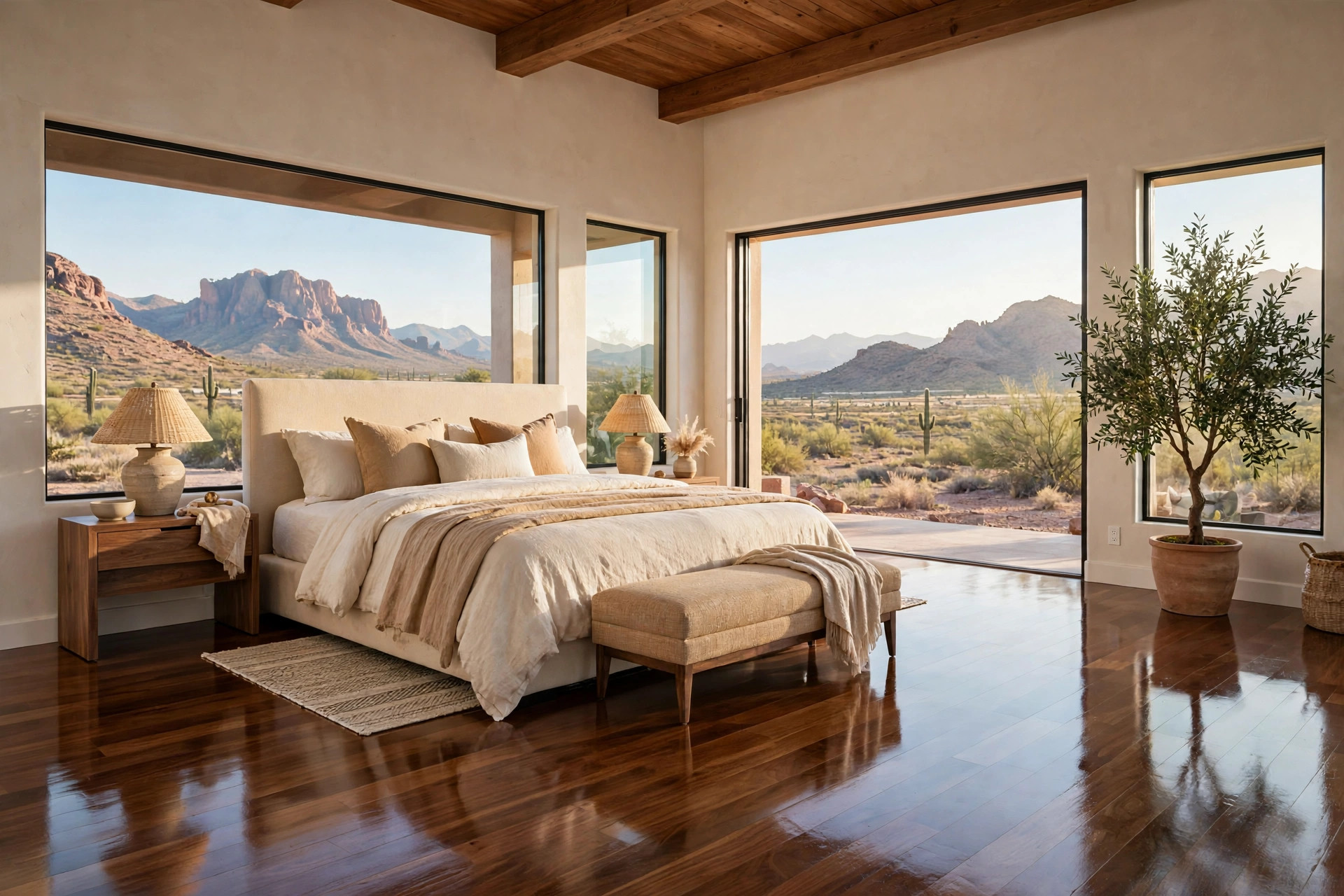
White oak floors are the hardwood Arizona homeowners ask about most: a light, varied, natural look that hides desert dust and fits modern desert homes. Here is the honest installer take on choosing it, putting it on a concrete slab, and caring for it in dry air.
Why are Arizona homeowners asking for white oak?
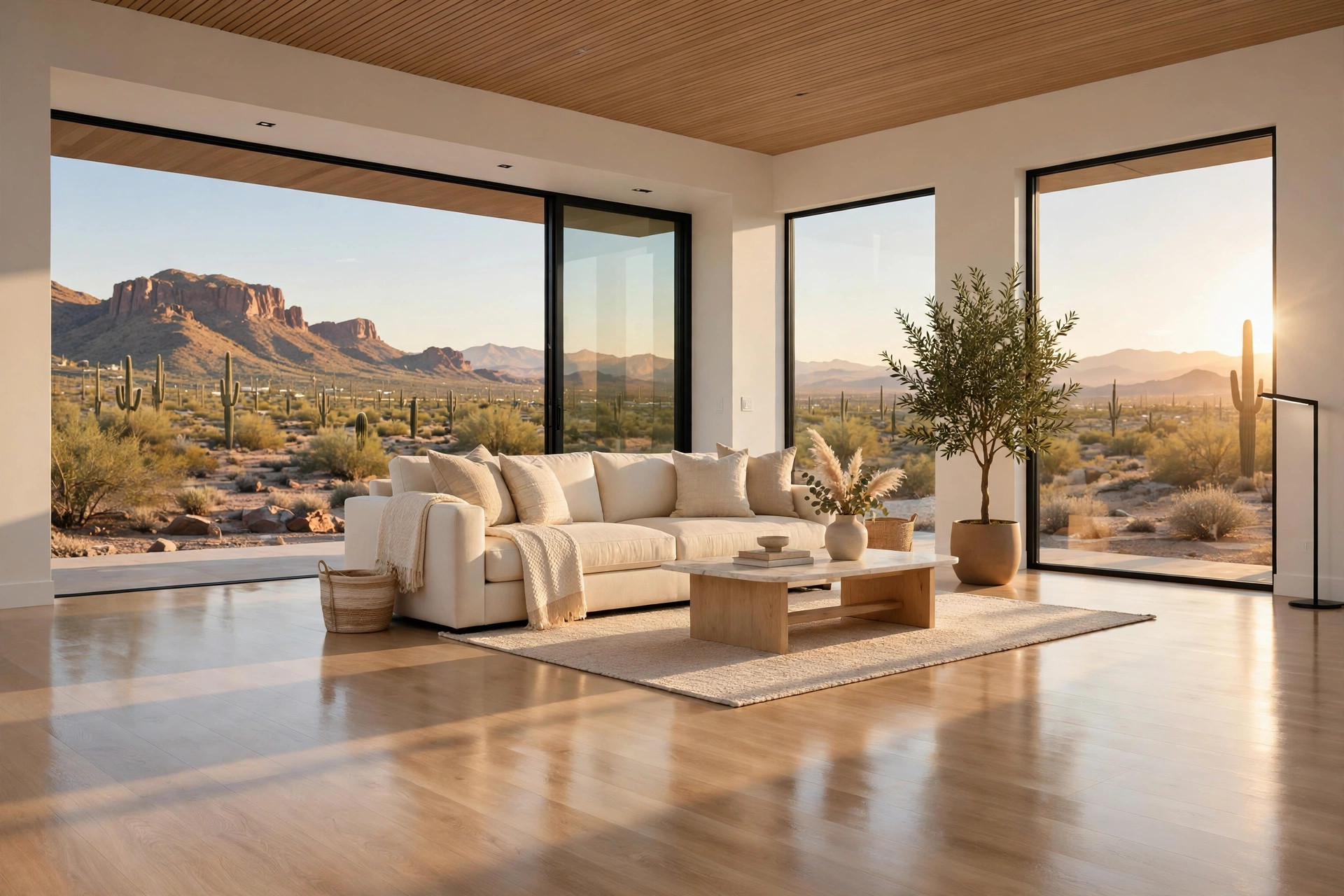
White oak has become the default hardwood request in East Valley remodels, and the reason is mostly the look homeowners describe the same way every time: light, natural, and not orange. It reads modern without reading cold, it works with the desert palette of tans, creams, and warm grays that Phoenix homes are being rebuilt around, and its grain variation forgives the reality of living in a dusty climate better than a dark, uniform floor does.
It also fits how Arizona homes are actually used. Open floor plans run one floor from entry to kitchen to living room, and a light oak tone keeps that whole run feeling bright in a house that spends half the year with the blinds half-closed against the heat. Homeowners are not choosing it despite the desert; the ones who choose well are choosing the version of it that the desert allows.
White oak on a concrete slab: engineered is the Arizona way
Almost every home in the Valley sits on a concrete slab, and that fact decides the form your white oak should take. Engineered hardwood is built in layers with a cross-grained core that barely moves when humidity changes, and it can be glued directly to a prepared, moisture-tested slab. Solid hardwood cannot go straight onto concrete at all — it needs a plywood subfloor or a specialized moisture system floated on top of the slab, adding height and cost before the desert air even gets a vote.
The air gets its vote anyway. Phoenix indoor air is extremely dry, and solid wood gives up moisture to that air, shrinks across its width, and opens visible gaps, especially in winter. Engineered construction was designed to resist exactly that movement, which is why it is the hardwood Arizona installers actually put on slabs — white oak included. Same species on top, far more stable underneath.
Choosing your white oak: the decisions that matter
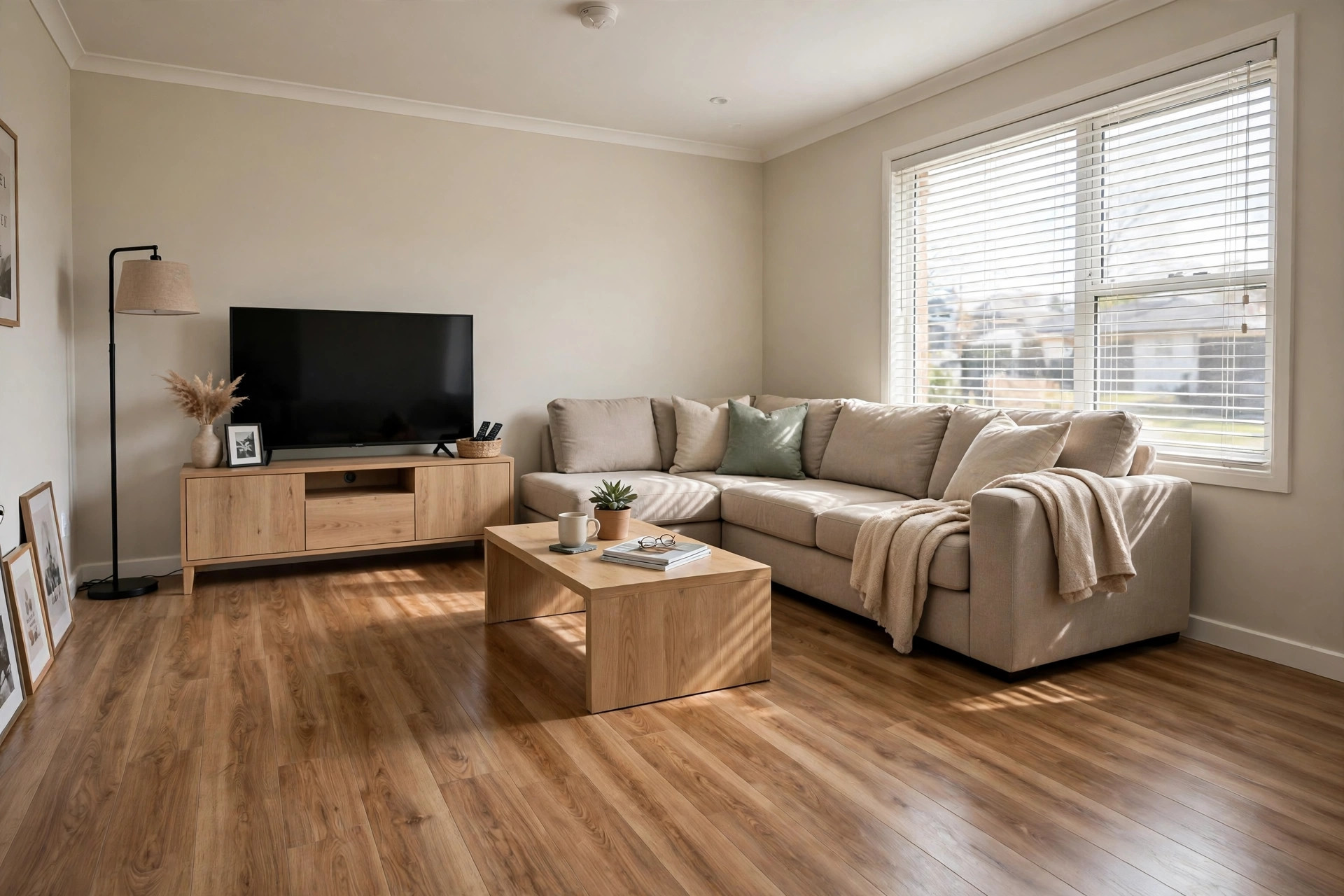
Start with form, then finish. On a slab, start with engineered construction and a wear layer worth having; if being able to sand and refinish the floor years from now matters to you, ask about the thickness of the real-wood layer before you buy, because thin-veneer engineered products cannot be refinished and thicker sawn layers typically can be, once or twice. Then pick the finish for desert life, not for the showroom: a matte or low-sheen finish hides dust, footprints, and micro-scratches far longer than a glossy one.
Color works the same way. Mid-tone and varied boards hide Maricopa County dust best, because our dust is light and pale — it disappears against a medium, varied surface and stands out on anything very dark or very pale. White oak's natural variation is an advantage here, as long as you do not stain it so dark or so pale and uniform that you give that advantage back. Always judge samples in your own light, on your own slab, before committing a whole house to one board.
Caring for white oak in dry desert air
White oak in Arizona does not need fussy care; it needs the right few habits. Keep grit off it — desert dust is fine mineral sand, and dragged under shoes it works like very mild sandpaper, so a walk-off mat at each entry and regular dry mopping protect the finish more than any product does. Clean with wood-floor-appropriate cleaners, keep water incidental rather than soaking, and put felt pads under furniture feet so point loads and drags do not mark the surface.
Sun is the other slow factor. Years of direct desert sun through west-facing glass can fade any wood floor unevenly where rugs sit, so window film or shades on the harshest glass are cheap insurance. And whatever form you install, respect the unglamorous steps at install time: a slab moisture test, 48 to 72 hours of acclimation in the home at normal living temperature, and prep flat to the manufacturer's tolerance. That is what keeps a beautiful species from being blamed for a skipped step.
An honest note on white oak cost
White oak is not the budget species, and a straight answer helps here: in the hardwood guidance already published on this site, red oak is the affordable benchmark, and white oak is listed among the species that raise material cost. There is no honest white-oak-only price to quote off a webpage — the number depends on whether you choose engineered or solid construction, the plank spec, and your slab's condition.
What can be stated plainly is the published hardwood frame it sits inside: engineered hardwood typically runs $7 to $13 per square foot installed in the Phoenix market, and solid hardwood $9 to $16, with old-floor removal typically adding $1 to $2.50 per square foot and slab prep $1 to $3 where the slab needs it. Your exact white oak number comes from measuring your rooms and testing your slab, not from a species chart.
Get a free, exact estimate
Thinking white oak for your home? Start with our Hardwood Flooring service page to see the species, finishes, and styles we install, then run the flooring cost calculator with your square footage to see the honest installed range for your rooms. When you want the exact number, Honest & Affordable Floor Covering starts with a free consultation and an honest, upfront quote — moisture test and slab prep included, no hidden fees. Call (602) 854-8363. Based in the East Valley — Gilbert, Mesa, Chandler, Ahwatukee, and Paradise Valley — and serving homeowners across Arizona.
Homeowners across Arizona rate Honest & Affordable five stars on Google for honest pricing, on-time crews and floors built to last. 20+ years of experience, fully licensed & insured.
Frequently asked questions
Can white oak flooring go on a concrete slab in Arizona?+
Yes — in engineered form. Engineered white oak glues directly to a prepared, moisture-tested slab and barely moves in dry desert air. Solid white oak cannot go straight onto concrete; it needs a plywood subfloor or a specialized moisture system over the slab, which adds height and cost.
Does white oak cost more than red oak?+
Generally, yes on material. In our published hardwood guidance, red oak is the affordable benchmark and white oak is among the species that raise material cost. The installed frame is the published Phoenix hardwood range — engineered hardwood at $7 to $13 per square foot installed and solid hardwood at $9 to $16 — and your exact figure depends on construction, spec, and slab condition.
How do you keep a light oak floor from showing desert dust?+
Choose variation and finish over a flat, uniform color: mid-tone, grain-varied boards with a matte or low-sheen finish hide pale desert dust best. Add walk-off mats at entries and dry-mop regularly, because desert grit is abrasive and does more quiet damage than dust you can see.
Ready for new floors?
Free consultation, honest upfront quote — no hidden fees. Serving all of Arizona from the East Valley.