luxury vinyl flooring pros and cons
Luxury Vinyl Flooring: The Honest Pros and Cons
Honest & Affordable Floor Covering · Arizona 5 min read
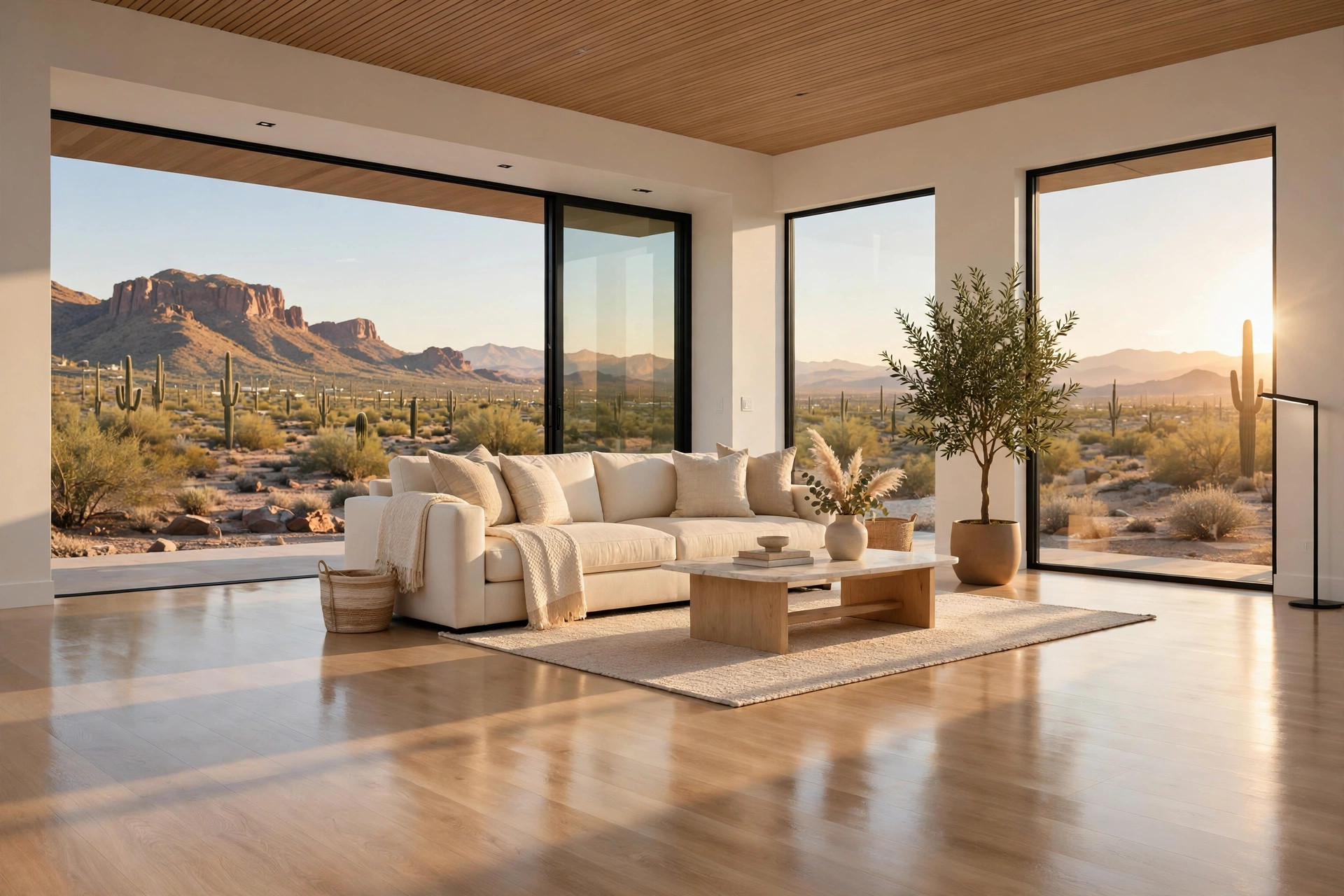
The honest pros and cons of luxury vinyl flooring from installers who put it down every week: waterproof and dog-tough on the pro side, heat, wear-layer, and no-refinish limits on the con side — plus the specs that decide which side your floor lands on.
Luxury vinyl flooring: the honest pros and cons at a glance
Luxury vinyl plank — LVP — earns its popularity honestly: it is waterproof through its entire body, softer and warmer than tile, faster to install, and kind to budgets, typically running $4.50 to $9 per square foot installed in the Phoenix market. For most Arizona homes on a concrete slab, it is the easiest single-floor answer there is.
The cons are just as real, and they are the ones brochures skip: vinyl moves with heat, a cheap wear layer dulls fast under desert grit, the floor cannot be refinished, and none of its strengths rescue a bad installation over an untested slab. This guide walks both sides the way an installer sees them — by failure mode, not by marketing.
The pros: waterproof, forgiving, and livable
Waterproof is the headline pro, and it is a structural one. An LVP core is plastic composite and cannot swell, so a dishwasher leak, a dog accident left overnight, or daily mopping is a cleanup, not a claim. Compare that with laminate, whose fiberboard core swells when moisture reaches it and does not recover — in the LVP-versus-laminate contest for Arizona homes, that single difference decides most kitchens, bathrooms, and laundry rooms.
The livability pros stack up behind it. LVP is warmer and quieter than tile and easier on dropped dishes and aging knees. A rigid SPC core resists dents from heavy furniture and big dogs launching off the couch. It installs faster than tile, handles whole-house runs on a slab without transitions between wet and dry zones, and photographs and appraises well at resale. For bedrooms, living rooms, and homes with dogs, it is often the smarter buy even where tile wins on pure permanence.
The cons: heat, sun, and the failures nobody advertises
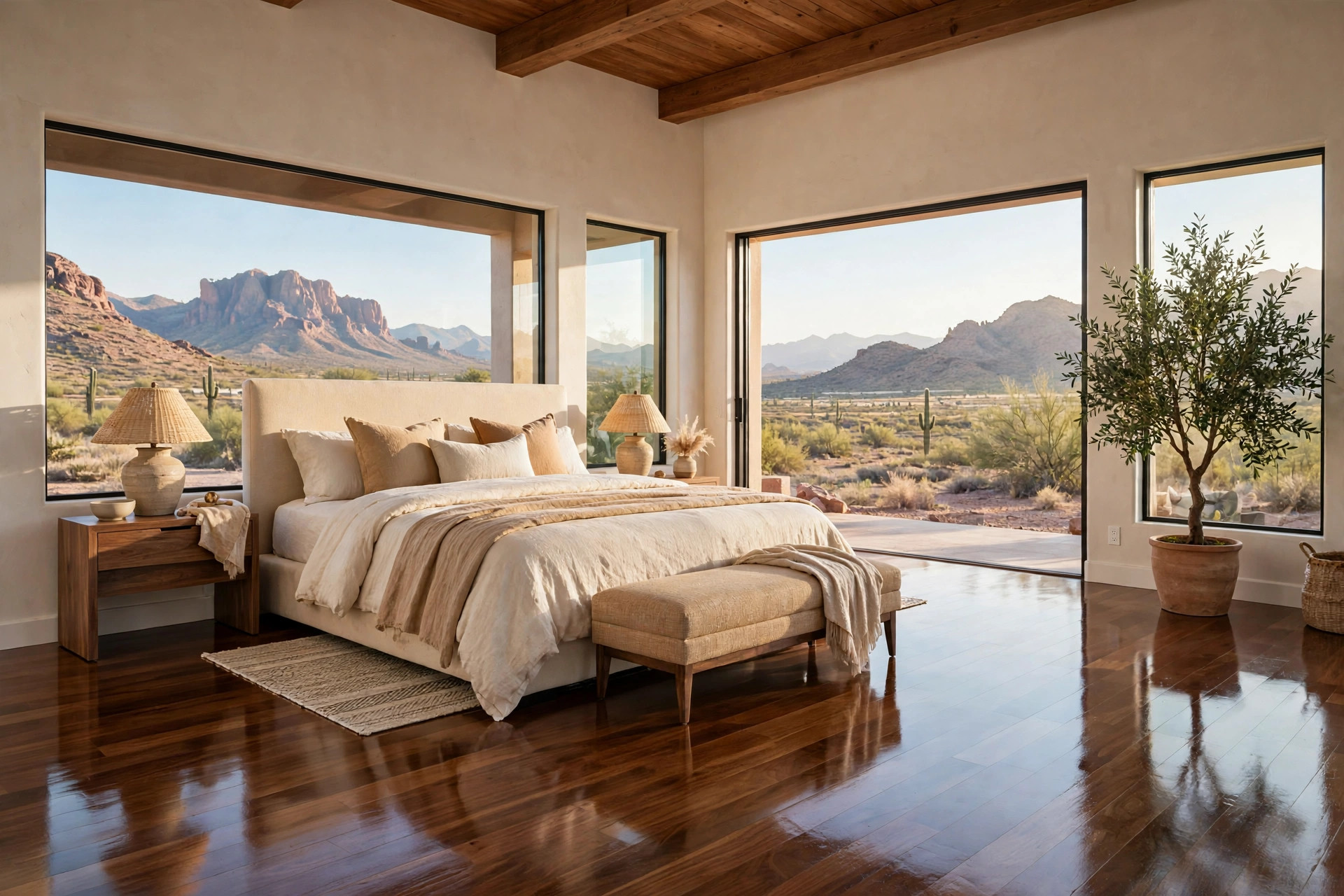
Heat is con number one in Arizona. A floor in front of west-facing glass can be heated well past 120 degrees at the surface, and lower-quality vinyl softens and expands in that heat — opening joints or buckling where the expansion gap was skimped. The print layer can also fade over years of intense exposure, especially darker colors. None of this disqualifies LVP here, but it means sun-blasted rooms need a rigid SPC core, the full specified expansion gap, and ideally window film or shades on the worst glass.
Moisture has a con side too, and it surprises people: waterproof describes the plank, not the assembly. Vapor rising from a concrete slab can be trapped under a floating floor, where it can grow mildew or soften adhesive on glue-down jobs. That is why a slab moisture test matters even for a waterproof floor — and why gapping, tenting, and buckling almost always trace back to temperature, moisture, or skipped prep rather than to the product name on the box.
The spec that decides everything: wear layer and core
Two specs decide which version of LVP you actually own. The first is the wear layer — the clear protective skin on top of the plank, measured in mils. Twelve mil is a residential grade meant for light traffic; 20 mil was originally a commercial spec, and with dogs, kids, and desert grit being dragged in on every paw and shoe, it is the honest grade for a busy Arizona home. Everything a household does to a floor lands on that layer first, and stepping up to 20 mil typically adds well under a dollar per square foot on material — the cheapest longevity in the whole quote.
The second spec is the core. SPC — stone plastic composite — is denser, more dent-resistant, and moves less in heat, so it wins in sunny rooms, kitchens, entries, and most ground-floor slabs. WPC — wood plastic composite — is softer, warmer, and quieter, so it wins in barefoot bedrooms. Choose them as two separate decisions: core for the room's heat and loads, wear layer for the traffic the floor has to survive. And know the limit both share: vinyl plank has no refinish option, so once wear reaches the printed design layer, the fix is replacing planks, not recoating them.
Who should buy LVP — and who should not
Buy LVP if you have dogs, kids, a slab home, wet rooms to cover, or a budget that tile cannot meet: spec a rigid SPC core and a 20 mil wear layer, and you have a floor that can realistically run fifteen years or more even with dogs. It is also the easiest whole-house answer when you want one continuous floor through living areas, halls, and bedrooms.
Think twice if the room is a true sun trap you cannot shade, if you want a floor you can refinish for decades, or if permanence outranks comfort — tile beats LVP on heat, sun, and lifespan, and lasts decades on a slab. And whichever way you land, the desert rules do not change: test the slab, prep it flat, acclimate the product 48 to 72 hours in the home, and leave the expansion space the manufacturer specifies. LVP's pros survive contact with Arizona only when the installation respects them.
Get a free, exact estimate
Want the pros without inheriting the cons? Start with our LVP Flooring service page for the waterproof plank options we install, then run the flooring cost calculator with your rooms and square footage to see where your job lands in the published $4.50 to $9 installed range. For the exact figure, Honest & Affordable Floor Covering offers a free consultation and an honest, upfront quote — slab test, prep, and trim lines shown, no hidden fees. Call (602) 854-8363. Based in the East Valley — Gilbert, Mesa, Chandler, Ahwatukee, and Paradise Valley — and serving homeowners across Arizona.
Homeowners across Arizona rate Honest & Affordable five stars on Google for honest pricing, on-time crews and floors built to last. 20+ years of experience, fully licensed & insured.
Frequently asked questions
What is the biggest disadvantage of luxury vinyl flooring?+
Heat movement in cheap product, and no second life. Lower-quality vinyl expands in Arizona sun and can buckle if the expansion gap was skimped, and vinyl plank cannot be sanded or refinished — wear through the print layer means replacing planks. A rigid SPC core, a 20 mil wear layer, and proper expansion space prevent most of it.
Is luxury vinyl flooring really waterproof?+
The plank is — its plastic-composite core cannot swell, so spills, mopping, and pet accidents sit on the surface until you clean them. The assembly still needs care: slab vapor trapped under a floating floor can grow mildew, which is why a moisture test before installation matters even for a waterproof floor.
How long does LVP last in an Arizona home?+
It depends mostly on the wear layer. A 20 mil wear layer over a rigid SPC core can realistically run fifteen years or more, even with dogs. Thin 6 or 12 mil products in gritty, high-traffic desert homes dull and show traffic lanes years sooner.
Ready for new floors?
Free consultation, honest upfront quote — no hidden fees. Serving all of Arizona from the East Valley.