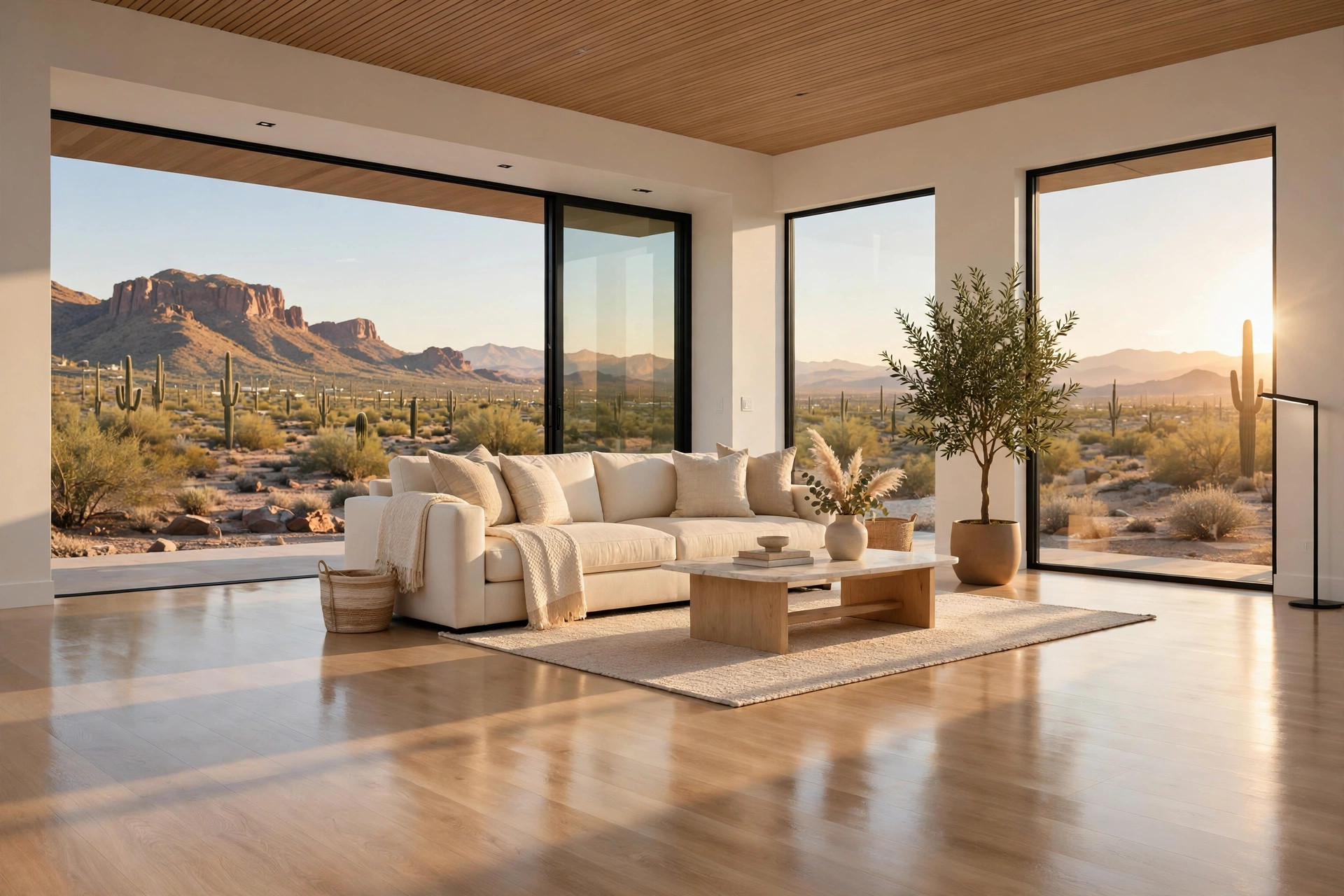
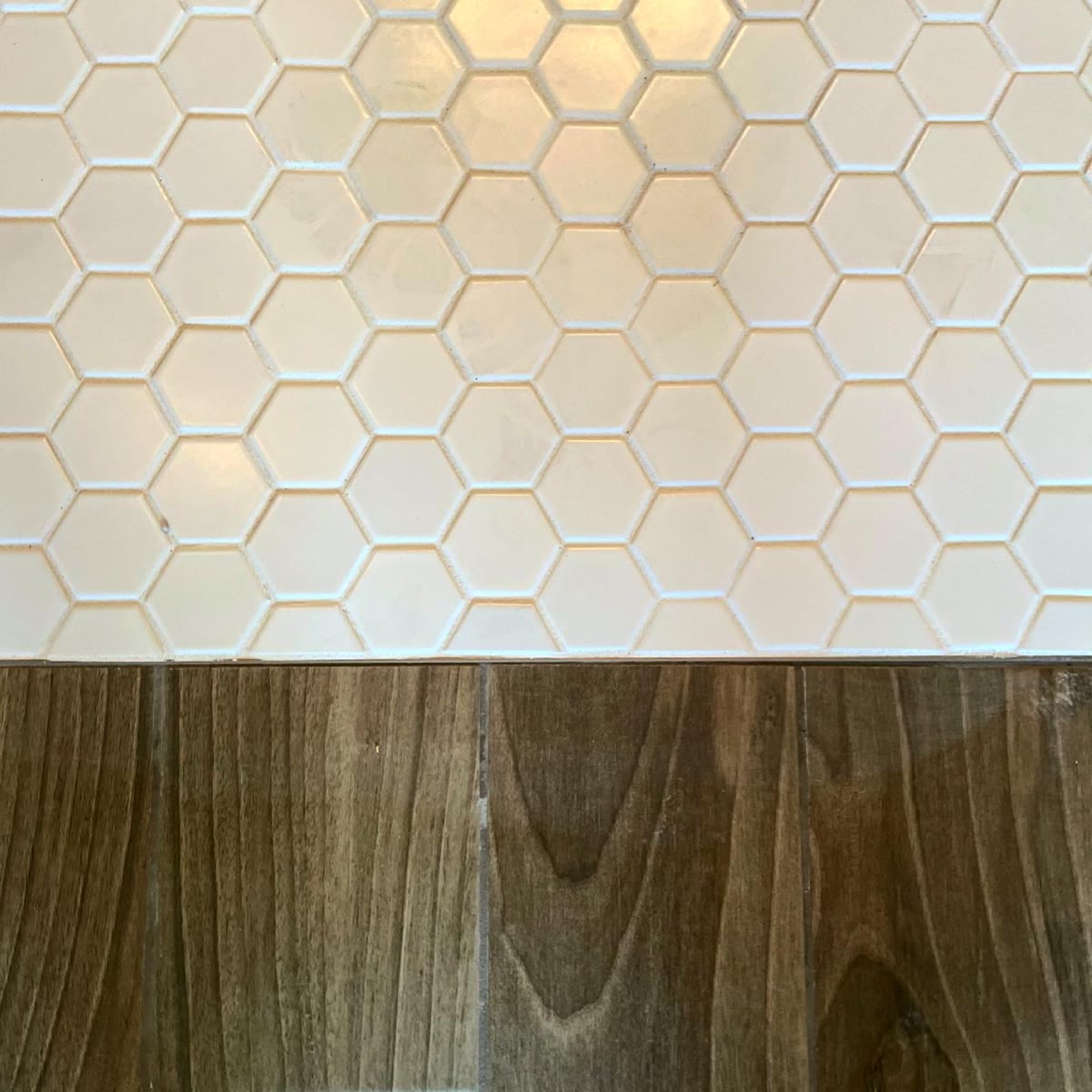
large format tile installation
Large-Format Tile (24×48): Cost, Lippage, and Why the Installer Matters
Honest & Affordable Floor Covering · Arizona 5 min read
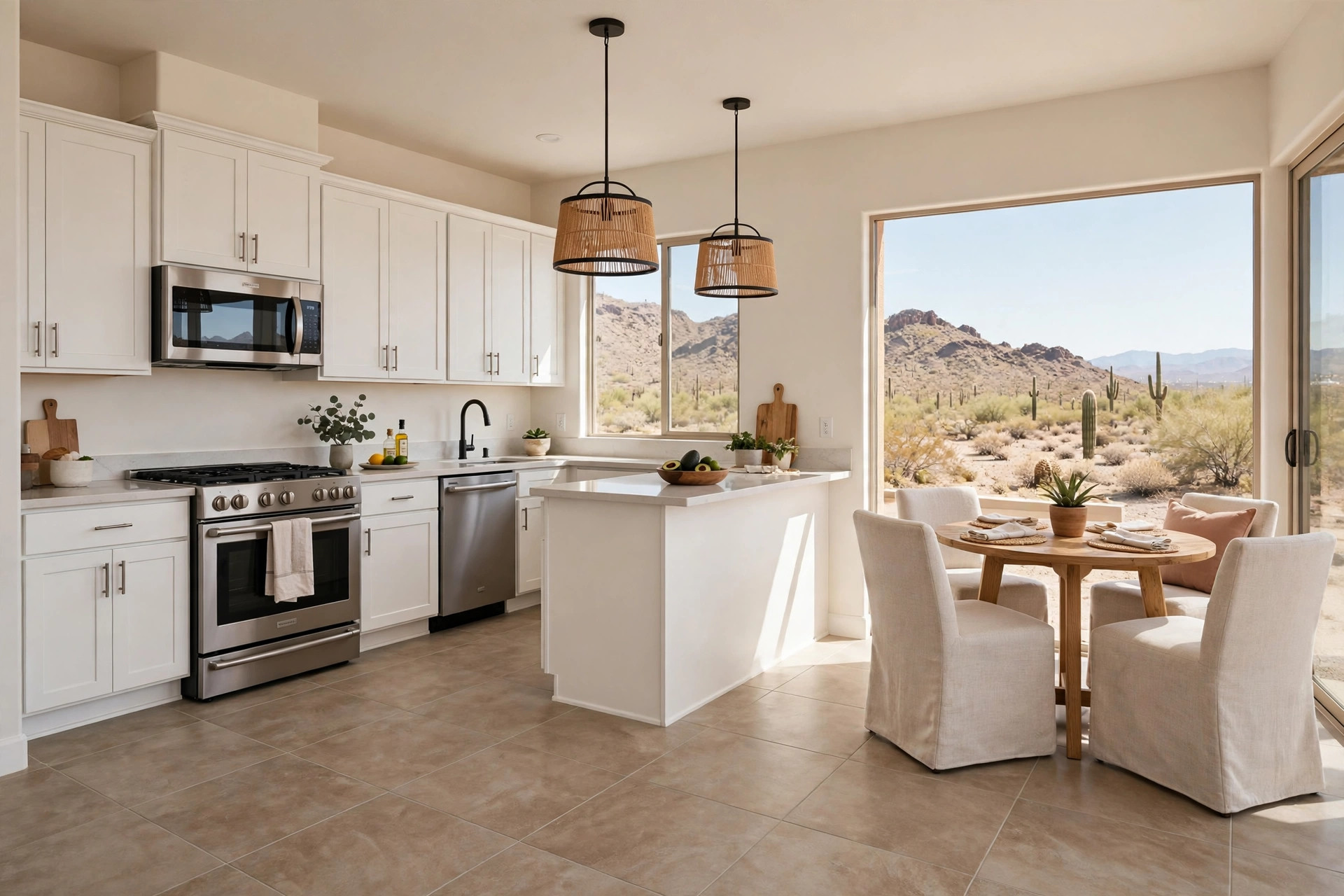
Large-format tile like 24×48 installs inside the published tile range of $11 to $22 per square foot — but its size is unforgiving: lippage, slab flatness, and setting skill decide whether it looks monolithic or wavy. Why the installer matters more than the tile.
How much does large-format tile installation cost?
Anchor the budget in the published frame first: tile in the Phoenix market typically runs $11 to $22 per square foot installed, and large-format tile — pieces like 24×48 — is installed inside that same published range, not at some separate luxury rate. Where a large-format job lands inside the range is decided less by the tile's size than by the work its size demands: slab preparation, setting skill, and the time it takes to place every very large piece perfectly.
That distinction matters because large-format quotes get padded with vague premium language. The honest version is simpler: the material can cost more per piece and far fewer pieces cover a room, but the labor is slower per piece and far less forgiving. You are paying for flatness and precision, which are real things — they just have names, and a good quote names them instead of charging for the word large.
Lippage: the flaw large-format tile cannot hide
Lippage is the height difference between the edge of one tile and the next — the lip your toe catches and the raking light exposes. Small tiles forgive it; each small piece can follow a gentle wave in the slab and the eye reads the grout pattern, not the surface. A 24×48 tile cannot follow anything. One long edge sitting high shows as a visible ridge and a shadow line across what was supposed to be a flat, monolithic field, and in a sunny Arizona room with light raking in from sliders, there is nowhere for it to hide.
Large tiles also come with some inherent warpage from firing — a very long piece is rarely perfectly flat itself — which is why layout, joint offset, and setting technique matter as much as the slab. The combination of a slightly crowned tile and a slightly uneven slab is the entire lippage problem, and managing it is a skill, not a setting material.
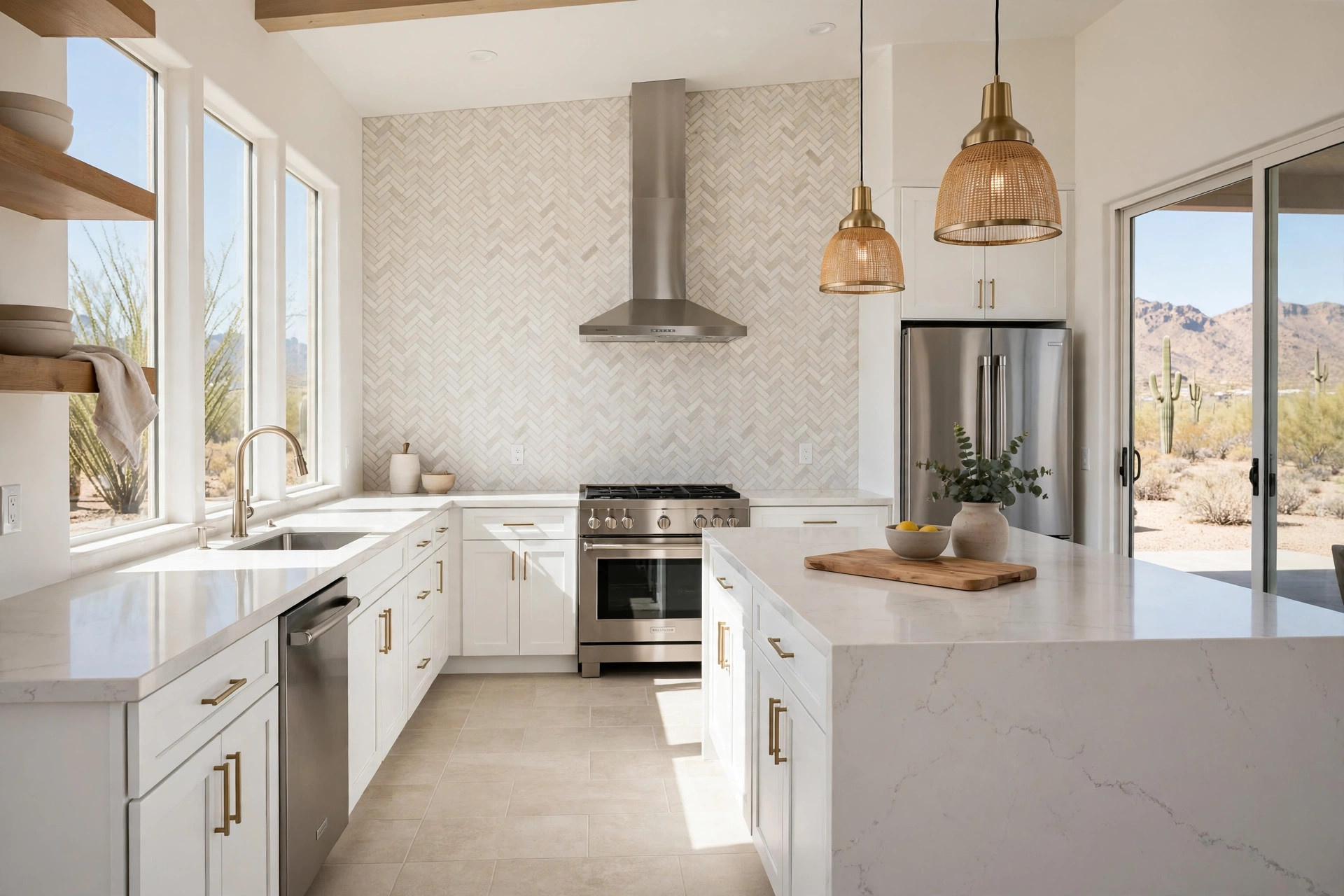
Slab flatness: the published spec large-format lives by
The standard this site publishes for any floor applies with double force here: most manufacturers require the slab to be flat within 3/16 of an inch over 10 feet, and many Phoenix slabs are not — especially in homes built fast during the boom years. A deviation that a small tile absorbs becomes, under a four-foot tile, a rocking piece, a hollow spot, or a lip at the joint.
So large-format work starts before tile: grinding high spots, filling low spots, or pouring self-leveler, which typically adds $1 to $3 per square foot where the slab needs it. Thinset coverage matters the same way — a very large tile needs its mortar bed worked so the piece is supported across its whole back, not dotted at the corners. Skipping either step does not save the money; it converts it into lippage and cracked corners later.
Fewer grout lines: the look, and what it asks of you
The reason homeowners want 24×48 is the look: a room covered in a handful of very large pieces has far fewer grout lines chopping it up, so floors read continuous and almost monolithic, and shower walls read like slabs of stone. Fewer lines also means less grout to seal and maintain — a real advantage in Maricopa County, where hard water builds scale fastest in porous grout.
The trade is that the remaining lines carry more visual weight. With few joints, every joint's straightness, width, and color is on display, and the layout — where the cuts land against walls, drains, and doorways — is the design. That planning happens on paper and on the dry-laid floor before mortar, and it is another place an experienced installer's hours are visibly spent.
Large-format in showers and as a backsplash
Large-format tile has moved into showers and backsplashes for the same reason: big pieces make a small shower feel bigger, with fewer grout lines to visually chop the room up — and it installs slow, because each big piece must sit perfectly flat, exactly as our small-bathroom shower guide puts it. In a shower, add the non-negotiables: tile and grout are not waterproof, so the membrane behind the tile and a properly sloped pan do the waterproofing, at any tile size.
As a backsplash, large pieces trade the many small cuts of mosaic work for a few very precise ones around outlets and cabinets, and the wall's flatness matters as much as a slab's — a wavy wall under a two-foot tile shows the same lippage logic vertically. In both uses, the tile choice is the easy part; the substrate and the setting are the job.
Get a free, exact estimate
Considering 24×48 for a floor, shower, or kitchen? Start with our Porcelain Tile Flooring service page for the large-format porcelain we install, compare our Tile Flooring service page for the full tile range, and see our Backsplash service page if the kitchen wall is the project — then run the flooring cost calculator with your square footage to frame the job inside the published $11 to $22 installed tile range. For the exact number, including the slab prep your large-format field needs, Honest & Affordable Floor Covering starts with a free consultation and an honest, upfront quote, no hidden fees. Call (602) 854-8363. Based in the East Valley — Gilbert, Mesa, Chandler, Ahwatukee, and Paradise Valley — and serving homeowners across Arizona.
Homeowners across Arizona rate Honest & Affordable five stars on Google for honest pricing, on-time crews and floors built to last. 20+ years of experience, fully licensed & insured.
Frequently asked questions
Does large-format tile cost more to install than regular tile?+
It installs inside the same published Phoenix range — tile at $11 to $22 per square foot installed — but tends to demand more of the job: slab prep to the flatness spec of within 3/16 of an inch over 10 feet, which typically adds $1 to $3 per square foot where the slab needs it, and slower, more precise setting. There is no honest separate large-format percentage premium; the cost is in the named prep and labor.
What is lippage and why is it worse with large tile?+
Lippage is the height difference between neighboring tile edges. Small tiles can follow a gentle slab wave without showing it; a 24×48 tile bridges that wave and shows any difference as a ridge and shadow line, especially under raking sunlight. Flat prep, layout, and setting technique are what control it.
Can large-format tile go in a shower or on a backsplash?+
Yes — large pieces make a small shower feel bigger and give a backsplash a clean, few-lined look, and both are common East Valley projects. In a shower the waterproofing membrane and sloped pan behind the tile remain mandatory at any tile size, and on a backsplash the wall must be flat enough that big pieces do not telegraph its waves.
Ready for new floors?
Free consultation, honest upfront quote — no hidden fees. Serving all of Arizona from the East Valley.