hard water stains on tile and grout how to prevent
Hard Water Is Ruining Your Tile and Grout: A Maricopa County Guide
Honest & Affordable Floor Covering · Arizona 3 min read
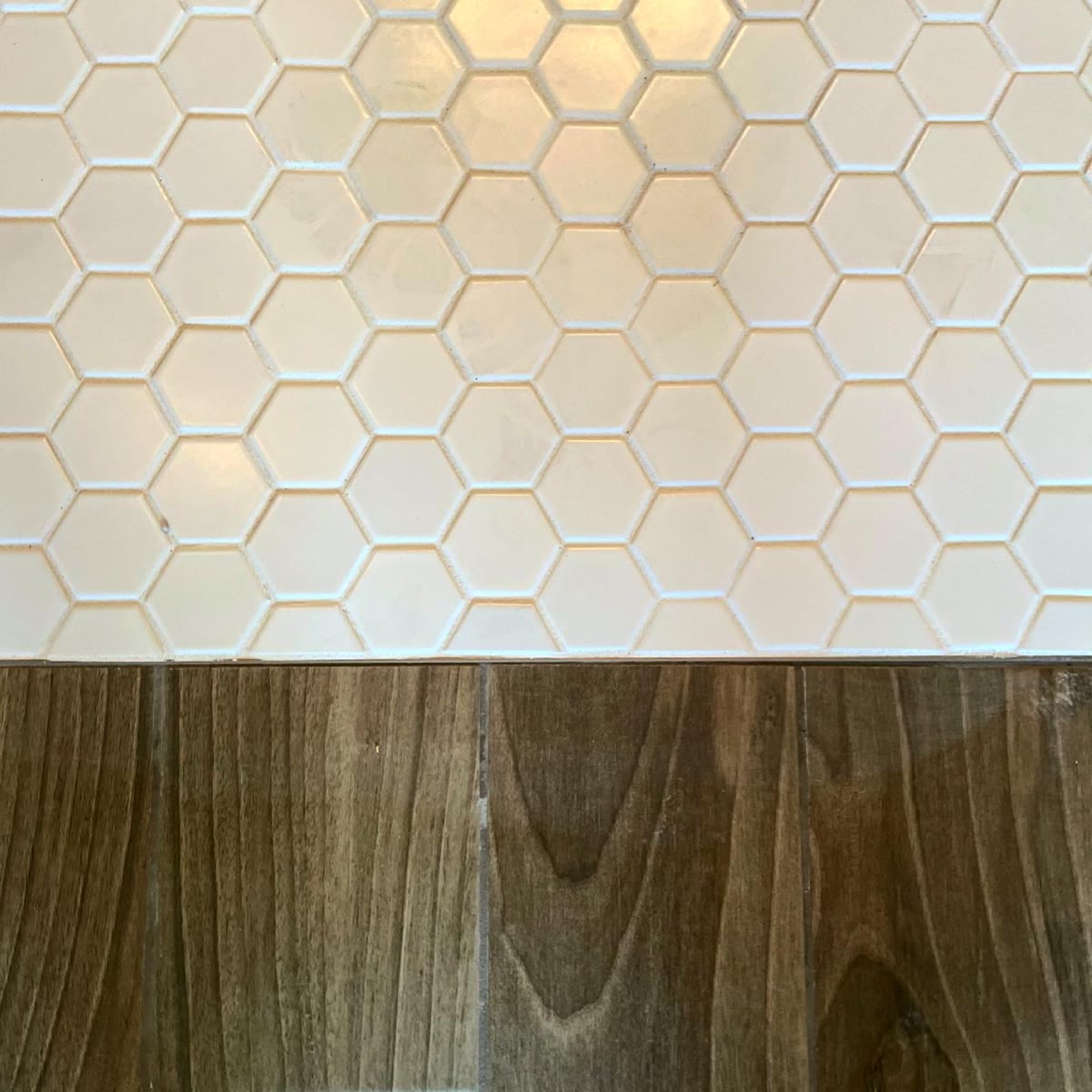
Hard water stains on tile and grout are a Maricopa County constant: water over 300 ppm leaves white scale that eats grout and dulls tile. Prevention that actually works.
Why does hard water stain tile and grout so fast in Maricopa County?
Maricopa County water commonly tests over 300 parts per million of dissolved minerals, among the hardest municipal water in the United States. Every shower and faucet splash deposits calcium and magnesium as the water evaporates, and the white scale builds fastest in grout because grout is porous. Unsealed grout absorbs the mineral water, and the crust forms inside the surface, not just on it.
Left alone, scale dulls tile, whitens dark grout permanently, and holds moisture and soap residue against the grout until it starts breaking down. In showers it also feeds the cycle of leaks at failed joints, which is why hard water is a flooring problem, not just a housekeeping annoyance.
Prevention starts at installation
The two decisions that matter most happen before the first shower: grout choice and sealing. Epoxy and high-performance grouts resist absorption far better than standard cement grout, and in a hard-water county that upgrade pays for itself in the showers. Cement grout needs a quality penetrating sealer at install and re-sealing on a regular cycle, typically every one to two years in a daily shower.
Glass and glazed tile shrug off scale better than natural stone, which can etch and stain from both the minerals and the acidic cleaners people use to fight them. If you love stone in a Phoenix shower, budget for sealing and gentle cleaners as part of owning it.

The routine that keeps scale from setting
Daily: a squeegee pass over shower walls and glass takes thirty seconds and removes most of the water before it can evaporate into scale. Weekly: a pH-neutral cleaner made for tile, not a vinegar spray; acid etches grout and stone slowly and makes future staining worse, which is the trap most homeowners fall into while trying to fix it.
For scale that has already set, use a cleaner specifically labeled safe for grout and your tile type, with dwell time doing the work instead of aggressive scrubbing. Metal brushes and pumice on glazed tile trade the crust for permanent scratches. Test any product in a hidden corner first.
When it is beyond cleaning
If grout is crumbling, joints are open, or scale has permanently whitened and pitted the surface, the fix is regrouting or a shower rebuild, not stronger chemicals. Open grout in a shower is a waterproofing risk, and in a tile shower the waterproofing behind the tile is what protects the house.
This is also where older Arizona bathrooms meet a bigger decision: many still have saltillo or dated ceramic with failing grout throughout the home. Removing saltillo and replacing it with modern tile or LVP is a common Maricopa County project, and its cost depends on demolition and slab prep, which is exactly what an in-home estimate measures.
Get a free, exact estimate
Not sure whether your grout needs sealing, regrouting, or a rebuild? Honest & Affordable Floor Covering starts with a free consultation, looks at the tile and grout in person, and gives you an honest, upfront quote for the right level of fix. Call (602) 854-8363. We serve all of Arizona from the East Valley, including Gilbert, Mesa, Chandler, Ahwatukee, and Paradise Valley.
Homeowners across Arizona rate Honest & Affordable five stars on Google for honest pricing, on-time crews and floors built to last. 20+ years of experience, fully licensed & insured.
Frequently asked questions
How often should shower grout be sealed in Arizona?+
Cement grout in a daily-use shower typically needs re-sealing every one to two years in hard-water areas. Epoxy and high-performance grouts need little to no sealing.
Is vinegar safe for removing hard water stains on tile?+
Use it cautiously or not at all. Vinegar is an acid that etches natural stone and degrades cement grout over time. pH-neutral or tile-specific descalers are the safer routine choice.
Will a water softener stop grout staining?+
A softener dramatically slows scale buildup and makes cleaning easier, but sealed grout and a quick squeegee routine are still the reliable protection for showers.
Ready for new floors?
Free consultation, honest upfront quote — no hidden fees. Serving all of Arizona from the East Valley.