carpet to hardwood stairs
Converting Carpet Stairs to Hardwood: Cost, Transitions, What Changes
Honest & Affordable Floor Covering · Arizona 5 min read
Converting carpet stairs to hardwood is a conversion, not a covering: expect an East Valley market range of $2,000 to $3,350 for a standard staircase in hardwood, plus the transitions, risers, and surprises the carpet was hiding. What actually changes when the carpet comes off.
What does converting carpet stairs to hardwood cost?
Start with the market frame, stated plainly: a competitor's published estimator for Chandler — Footprints Floors — puts a standard staircase at $1,510 to $2,600 in LVP or laminate and $2,000 to $3,350 in hardwood. That is an East Valley market range from a competitor's estimator, not Honest & Affordable's price, and we cite it because it is a real, checkable local benchmark for what a conversion involves. Your staircase is priced by standing on it — step count, width, returns, and what the carpet is hiding decide the actual figure.
This article is the conversion angle: what comes off, what is found underneath, and what has to change for carpet-built stairs to become wood stairs. If you want the per-step math itself — what a single step costs and what that price includes — our separate guide, What Does It Cost to Put Hardwood on Stairs?, breaks it down step by step. The two questions are different: per-step is pricing; conversion is the project.
What changes the moment the carpet comes off
Carpet is forgiving in a way wood is not. It wraps over rough edges, hides uneven risers, muffles every footstep, and gives grip even on a worn tread. Underneath it, many Valley staircases are rough builder pine or framing material that was never meant to be seen — the existing stairs article on this site names that mid-project surprise because it happens so often: the carpet comes up and the scope honestly changes, because those steps cannot simply be stained and called hardwood.
A conversion therefore rebuilds the visible stair: real treads on the walking surface, riser facings that finish the face of each step, and nosing — the rounded front edge — built to be walked on for decades. Sound changes too. A hardwood staircase is louder than a carpeted one, in a good, solid way when it is built well and in a hollow way when it is skinned thin. Many homeowners plan a runner from the start for exactly that reason, which is a design decision to make before the treads are finished, not after.
Transitions: where a conversion succeeds or looks patched
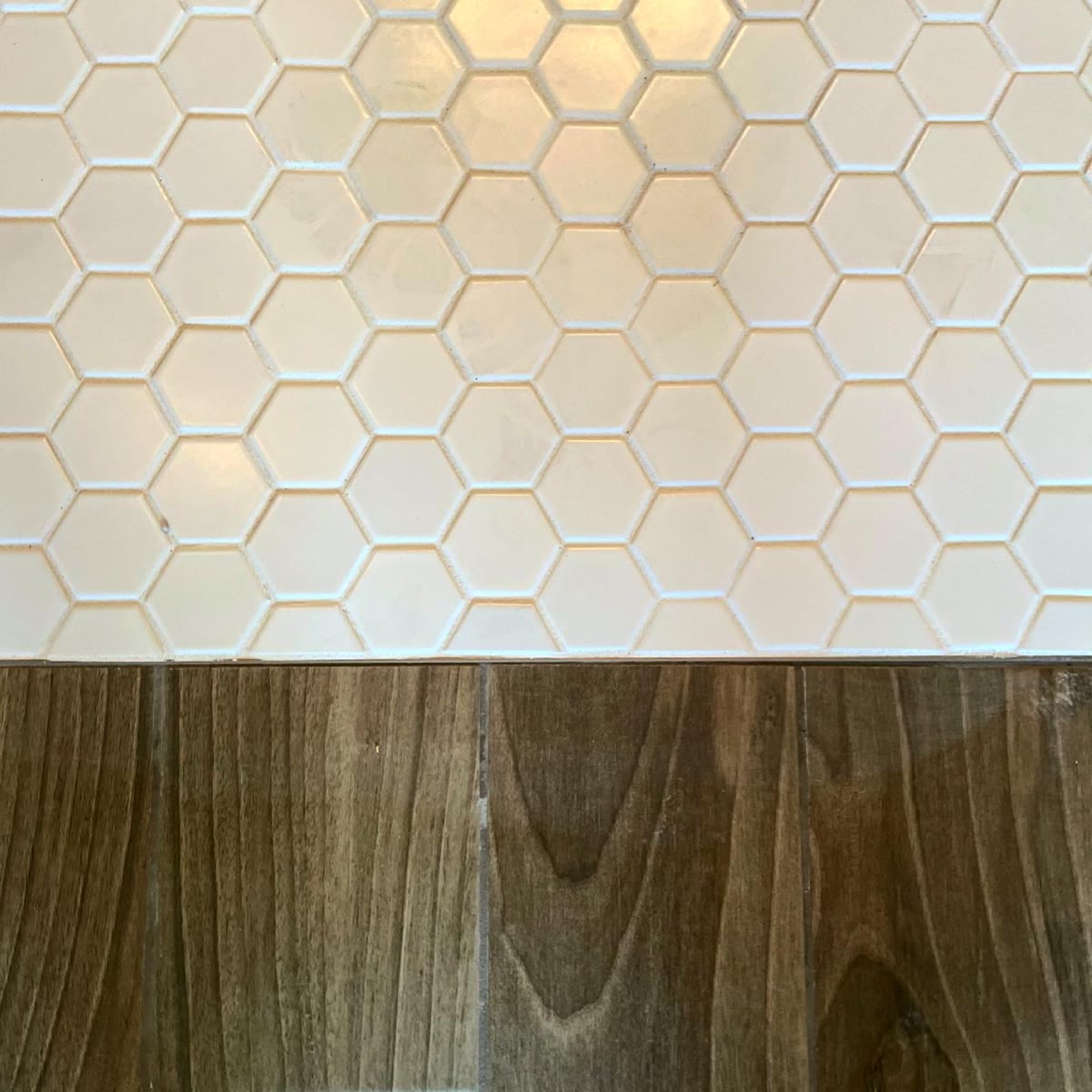
The staircase meets the rest of the house at both ends and along its sides, and every meeting is a transition that has to be designed. At the top, the last riser and nosing meet the upstairs floor — which may itself be changing from carpet to wood — and the heights have to land so the final step feels like every other step, not a trip lip. At the bottom, the first tread meets the downstairs floor, and a hardwood staircase flowing into a new hardwood or LVP floor wants its species, tone, or deliberate contrast decided as one composition.
Along the sides, the conversion meets skirt boards, walls, and any open side where treads return around the staircase. Open returns need mitered custom cuts, and railings and balusters meet the new treads at a slightly different height than they met the carpet — carpet compresses; wood does not. None of this is exotic, but all of it is why a conversion is quoted from the staircase itself rather than from a photograph of it carpeted.
Hardwood, or LVP and laminate on the stairs instead?
The same market benchmark shows the honest spread: $2,000 to $3,350 for a standard staircase in hardwood against $1,510 to $2,600 in LVP or laminate. Hardwood buys solid treads that wear well, can be refinished, and feel like furniture underfoot. LVP on stairs, fitted with matching stair nosing, buys water resistance and a lower ticket, and it can match an LVP floor running through the rest of the home so the staircase reads as part of the floor rather than a separate project.
Laminate sits with LVP in that market band and shares its logic: a sensible match when the adjoining floor is laminate. What we steer homeowners away from is mixing by accident — choosing stair material by leftover budget after the floors are bought. The staircase is the most touched, most photographed vertical surface in a two-story home; decide it as part of the floor decision and match or contrast it on purpose.
How the conversion is sequenced
A standard straight hardwood staircase usually takes one to two days including demo of the old covering, with custom returns, winders, and stain matching adding time. The sequence runs: carpet, pad, and tack strips off; the underlying steps inspected and rebuilt where they are rough or damaged; treads and risers cut, fitted, and finished; then transitions at the top, bottom, and open sides resolved, and trim finished so the staircase reads as one piece of work.
Plan the household around those days the way you would any floor: the stairs are the only route upstairs, so the work is scheduled, not squeezed in. And decide the finish questions — runner or bare, match or contrast, railing touch-ups — before demo day, while changing your mind is still free.
Get a free, exact estimate
Converting your staircase? Start with our Custom Stairs service page for how stair work is built into a flooring project, read the per-step cost guide linked above for the pricing breakdown, and run the flooring cost calculator if the floors adjoining the stairs are part of the same project. For the staircase itself, the only honest price comes from measuring it: Honest & Affordable Floor Covering starts with a free consultation and an honest, upfront quote with the conversion spelled out. Call (602) 854-8363. Based in the East Valley — Gilbert, Mesa, Chandler, Ahwatukee, and Paradise Valley — and serving homeowners across Arizona.
Homeowners across Arizona rate Honest & Affordable five stars on Google for honest pricing, on-time crews and floors built to last. 20+ years of experience, fully licensed & insured.
Frequently asked questions
How much does it cost to convert carpet stairs to hardwood?+
A competitor's published Chandler estimator puts a standard staircase at $2,000 to $3,350 in hardwood and $1,510 to $2,600 in LVP or laminate — an East Valley market range, not our price. Step count, width, open returns, winders, and the condition of the steps under the carpet move your actual figure, which is why conversions are quoted from the staircase itself.
What is usually found under carpet on stairs?+
Often rough builder pine or framing material that was never meant to be seen, since carpet was always planned over it. That is why a conversion rebuilds the visible stair with real treads and riser facings rather than simply uncovering and staining what is there.
Do the stairs have to match the floor at the top and bottom?+
No — they have to meet it well. Matching species and tone is one honest choice; a deliberate contrast is another. What matters is that the transitions are designed: heights that feel even at the top step, and nosing, skirt, and trim work that makes the staircase read as one piece with both floors.
Ready for new floors?
Free consultation, honest upfront quote — no hidden fees. Serving all of Arizona from the East Valley.