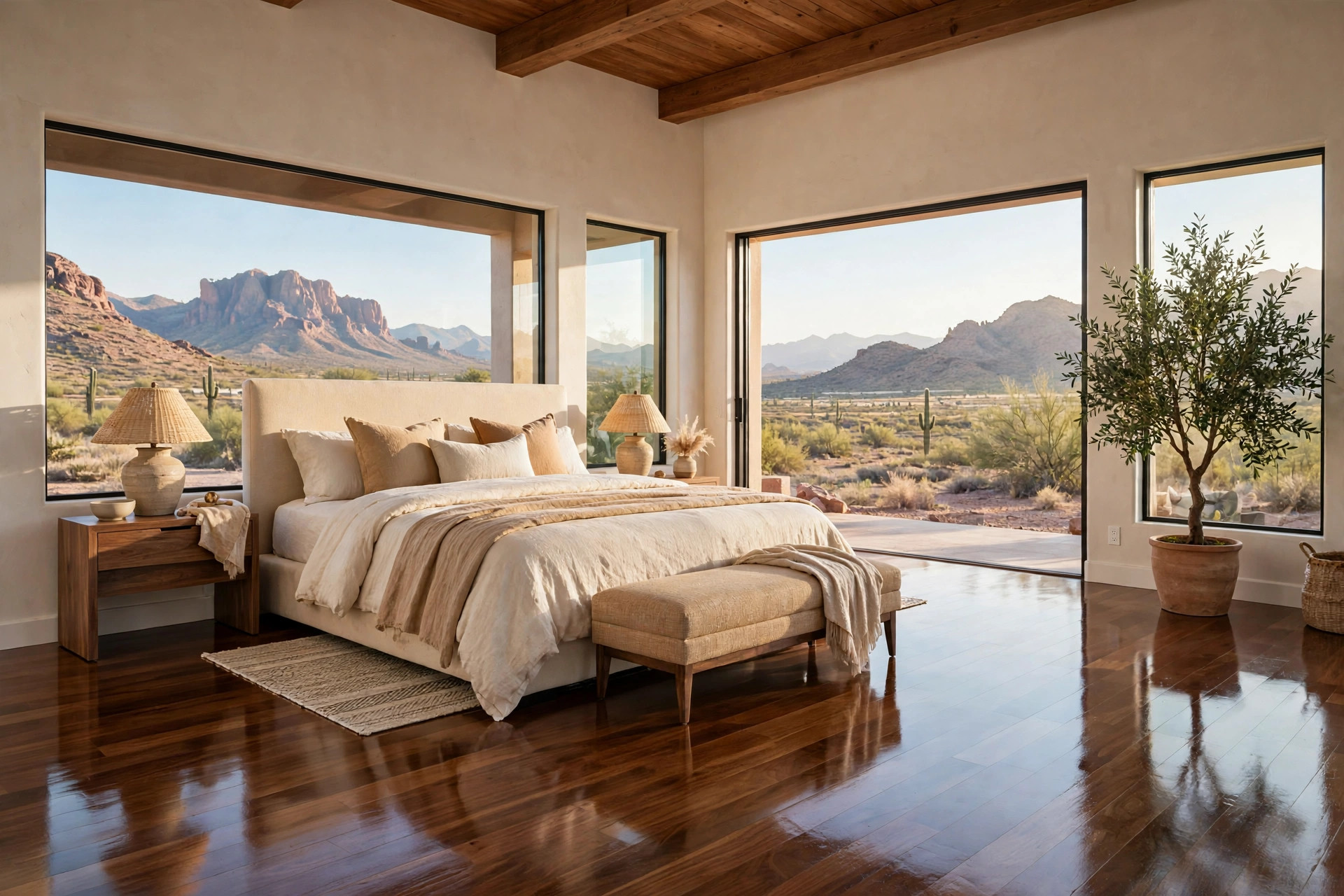
Pattern guide · Arizona edition

Herringbone & patterned flooring

Herringbone is not a material — it is a pattern, and it can be laid in luxury vinyl plank, tile, hardwood or laminate, with a framed border or wall to wall. Here is what changes when you choose the pattern: the labor, the honest Phoenix cost by material, and the rooms where it earns its place in an Arizona home.

5.0 · 47 Google reviews Licensed & insured We install all four materials
Finished patterned tile floor in an Arizona living room, installed by Honest & Affordable

The short answer

Pick the material for the room first — waterproof LVP where water and dogs live, tile where sun and showers rule, hardwood for real wood, laminate only where it stays dry — then lay that material in herringbone. The pattern itself does not change what a floor can survive; it changes how the floor looks, and how much labor it takes to install. Expect the higher end of each material's published installed range, because nearly every edge piece is cut and the whole field is laid out before it is set.

Herringbone, by material

Ranges below are the installed ranges from our published guide “Flooring Installation Cost in Phoenix (2026)”. For pattern work, plan on the higher end of your material's range.

LVP (luxury vinyl plank)

$4.50–$9 / sq ft installed · published Phoenix range

The most forgiving herringbone in an Arizona home: waterproof through its whole body, warm underfoot, and available in click systems made for patterned layouts. A rigid SPC core is the slab-friendly pick — it resists dents and stays stable when summer sun pours through big sliders.

Best for: Great rooms, kitchens and whole-home runs where water and dogs are part of life

Our LVP Flooring service

Tile — porcelain & ceramic

$11–$22 / sq ft installed · published Phoenix range

The classic herringbone, and the only version that belongs in a shower or bathroom. Tile ignores sun and heat, stays cool underfoot through a Phoenix summer, and a plank-format porcelain gives you a wood-look herringbone that water cannot hurt. Every joint has to sit flat — pattern shows any unevenness, so layout and slab prep decide the result.

Best for: Entryways, bathrooms, kitchens and sun-blasted rooms that punish other floors

Our Tile Flooring service

Hardwood

$9–$16 / sq ft installed · published Phoenix range

Real wood in herringbone is the traditional premium statement — no printed picture, just grain turning at right angles across the room. In Arizona the slab form is engineered hardwood glued to a prepared, moisture-tested slab; solid hardwood needs a plywood subfloor or moisture system on concrete and moves the most in dry desert air.

Best for: Primary living areas and bedrooms in long-term homes that want the real material

Our Hardwood Flooring service

Laminate

$4–$8 / sq ft installed · published Phoenix range

The lowest-cost way into the pattern, with a convincing wood look for dry rooms. The honest limit is the same as straight-laid laminate: its fiberboard core swells when moisture reaches the seams, so keep laminate herringbone in living rooms and bedrooms and out of kitchens, bathrooms and laundry rooms.

Best for: Dry living rooms and bedrooms where budget rules and moisture risk is low

Our Laminate Flooring service

Comparing the two most popular pattern materials head to head? Start with our laminate vs LVP comparison — the water, sun and slab rules there decide the material before the pattern is even discussed.

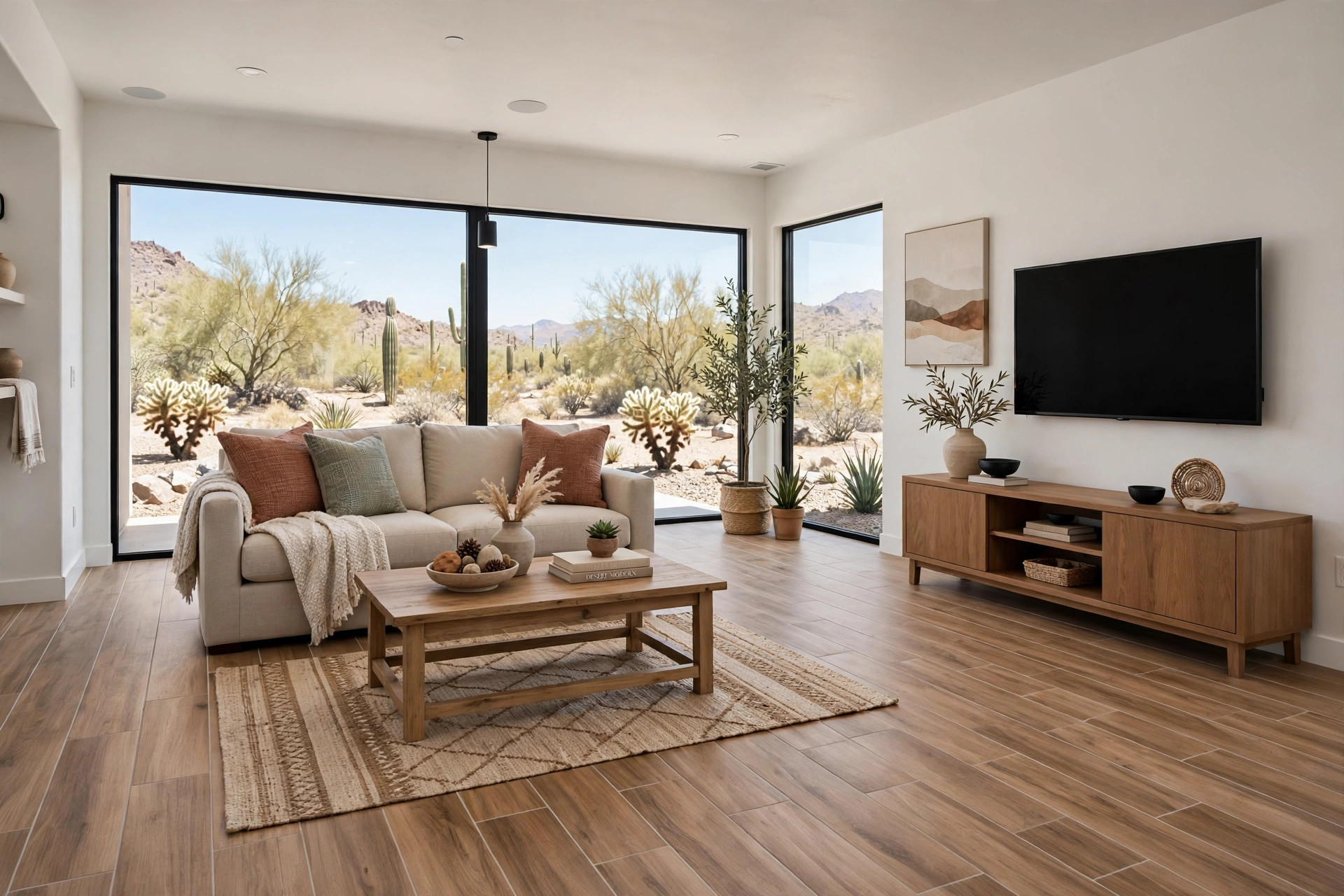
Finished plank floor in an Arizona main living area
Plank flooring — finished main floor, our work
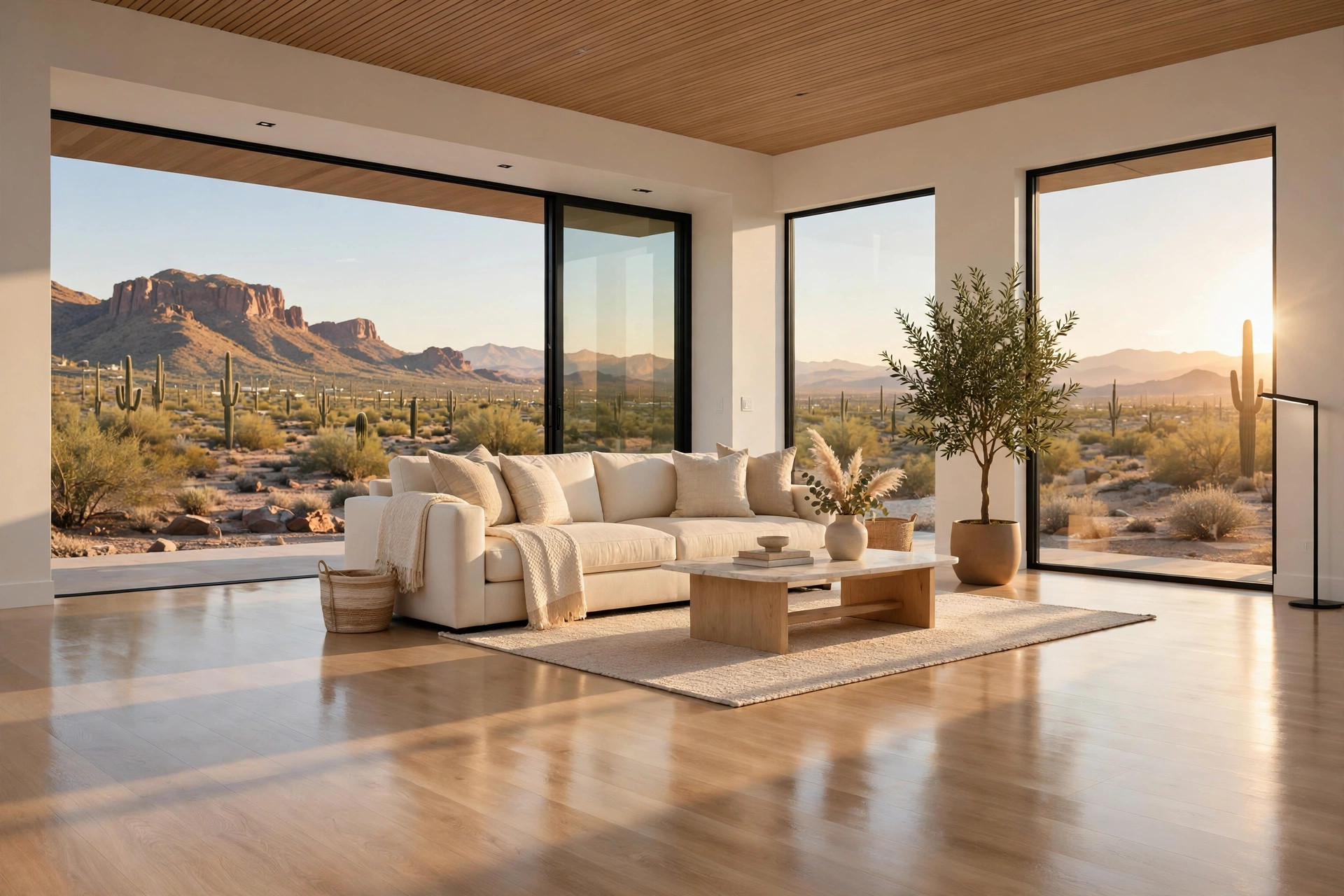
Finished wood floor in an Arizona master suite
Wood flooring — finished master suite, our work

Why pattern work costs more in labor

The material in the box is the same material. What you are paying for in herringbone is the installer's hours — more layout time, more cuts, and a slower, checked pace across the whole field. That is why honest quotes put pattern work at the higher end of the material's installed range instead of inventing a separate pattern price.

Layout comes first

The pattern starts from a true centre line and has to hold its angle across the whole room. That means measuring, snapping lines and dry-laying the field before the first piece is set — time a straight install never spends.

Nearly every edge is a cut

Where straight rows only cut the last piece in each row, herringbone cuts along every wall, cabinet run and doorway the zigzag meets. More cuts means more time, more care, and more material worked at the edges.

Each piece sets the next one's angle

A patterned field goes down piece against piece, checked as it grows. It is slower, deliberate work — and it has to be, because a small drift at the start of the room is a visible error by the far wall.

Get a first number for your rooms — straight or patterned — in the flooring cost calculator, then let us measure the actual space and price the pattern in writing, free.

With a border, or without

With a border

A straight frame of planks or tile runs around the patterned field. It gives a large room a finished, deliberate edge, a clean place for the pattern's angled cuts to land, and a natural transition into the next space. In the big open great rooms common across the East Valley, the border is usually what makes herringbone look designed rather than accidental. It does add layout and cutting work at the frame — that is part of why bordered pattern work sits at the top of the range.

Without a border

The pattern runs wall to wall. It feels more modern, keeps a smaller room feeling larger, and is the usual choice in entryways and bathrooms. The trade-off is visibility: every angled edge cut shows along the walls, so the setting has to be precise — there is no frame to absorb a small imperfection. Neither choice is wrong; the room decides, and we will lay both options out at the consultation.

Where it works in Arizona homes

Almost every Valley home sits on a concrete slab — and a pattern shows slab unevenness that straight rows can hide, so flat prep matters even more here. Beyond that, the room and the material have to match:

Entryways & foyers

The pattern's natural home: a small, high-impact area where herringbone reads as intentional design the moment the door opens — and where a tile version shrugs off monsoon-season shoes and desert grit.

Great rooms & open living areas

East Valley open plans give the pattern room to run. Long sightlines are where herringbone earns its money — and where a border frame keeps a big field from looking unfinished at the edges.

Kitchens & dining areas

In LVP or tile, herringbone turns the hardest-working floor in the house into the design feature. Both materials handle sink and dishwasher water; laminate does not belong here in any pattern.

Primary bedrooms

A softer, quieter use of the pattern in LVP or hardwood — enough movement to feel custom, without the visual energy a busier living space can absorb.

Bathrooms & showers (tile only)

Tile herringbone on a bathroom floor or shower wall is a proven Arizona look. It is also the version where waterproofing behind the tile and flat, careful setting matter most, because the pattern shows every uneven joint.

Hallways — with a caveat

A narrow hallway can crowd the pattern and force a lot of cuts along both walls. Often a straight or bordered layout reads cleaner there; we will lay both options out honestly at the consultation before you commit.

Explore the underlying services: LVP flooring · Tile flooring · Hardwood flooring · Laminate flooring

Herringbone questions

What is herringbone flooring?+

Herringbone is a pattern, not a material. Rectangular planks or tiles are laid at right angles to each other in a broken zigzag, so the eye reads movement and direction across the room instead of straight rows. The same LVP, tile, hardwood or laminate product looks like a completely different floor in herringbone — which is why it is priced and planned as pattern work, not as a standard straight install.

Which flooring materials can be installed in a herringbone pattern?+

All four materials Honest & Affordable installs: luxury vinyl plank, tile, hardwood and laminate. LVP is the most forgiving and the only plank option that is waterproof through its whole body; tile is the version for bathrooms and showers; hardwood — engineered on an Arizona slab — is the real-wood premium; laminate is the lowest-cost route, for dry rooms only, because its fiberboard core swells when moisture reaches the seams.

How much does herringbone flooring cost in Phoenix?+

Start from each material's published installed range in our 2026 Phoenix cost guide — LVP $4.50 to $9 per square foot, laminate $4 to $8, hardwood $9 to $16, and tile $11 to $22 — and expect the higher end of the range for pattern work. Herringbone does not carry a separate flat pattern price; the pattern pushes a job toward the top of the material's range because of the extra cutting and layout labor. Run your rooms through our flooring cost calculator for a first number, then get the exact figure in a free, written estimate.

Why does a herringbone pattern cost more than a straight install?+

Labor, in three places. First, layout: the pattern has to start from a true centre line and stay on angle across the whole room, which takes measuring and dry-laying time before the first piece is set. Second, cuts: nearly every edge piece is cut, and cut again as the pattern meets walls, cabinets and doorways. Third, pace: each piece is placed against the last one's angle, so a patterned field simply goes down more slowly than straight rows. The material is the same — the hours are not.

Herringbone with a border or without — which should I choose?+

A border — a straight frame of planks or tile around the patterned field — gives a large room a finished, deliberate edge, a clean place for the pattern's angled cuts to land, and a natural transition into the next room. Without a border, the pattern runs wall to wall, which feels more modern and can make a smaller room feel larger, but every angled edge cut shows along the walls. In big East Valley great rooms we usually recommend the border; in smaller entries and bathrooms, wall-to-wall often reads better. We will show you both against your room at the free consultation.

What is the difference between herringbone and chevron?+

In herringbone, whole rectangular pieces meet at right angles, so the zigzag has a broken, stepped edge. In chevron, the ends of the pieces are cut on an angle so they meet in a clean, continuous point. Herringbone works in a wider range of standard plank and tile products; chevron usually needs product made or cut specifically for it. Both are pattern work and both take more layout and cutting time than a straight install.

Does herringbone work in Arizona homes?+

Yes — with the same Arizona rules as any floor here, applied more strictly. A pattern shows slab unevenness that straight rows can hide, so the slab has to be prepped flat before the first piece goes down. Tile herringbone stays cool underfoot and ignores desert sun; LVP in a rigid SPC core handles heat and slab life well; laminate's print can fade unevenly in strong sun and its core is the wrong bet near water. Material choice by room matters more in a pattern, not less.

Can herringbone go in a small room?+

It can, and an entryway or powder bathroom in tile herringbone is one of the highest-impact small projects there is. The honest caveats are that a small room still carries the pattern's layout time, and a very narrow space such as a hallway can crowd the zigzag and force awkward cuts along both walls. Plank size matters too — a smaller-format piece keeps the pattern in proportion to the room.
Price your pattern in writing

Tell us the room, the material and whether you want the border — we will measure, check the slab, and put an honest, upfront price in writing, free. Or run your rooms through the cost calculator first.

Prefer to talk? Call (602) 854-8363 — Mon–Sat, 8 AM–8 PM.